TL;DR
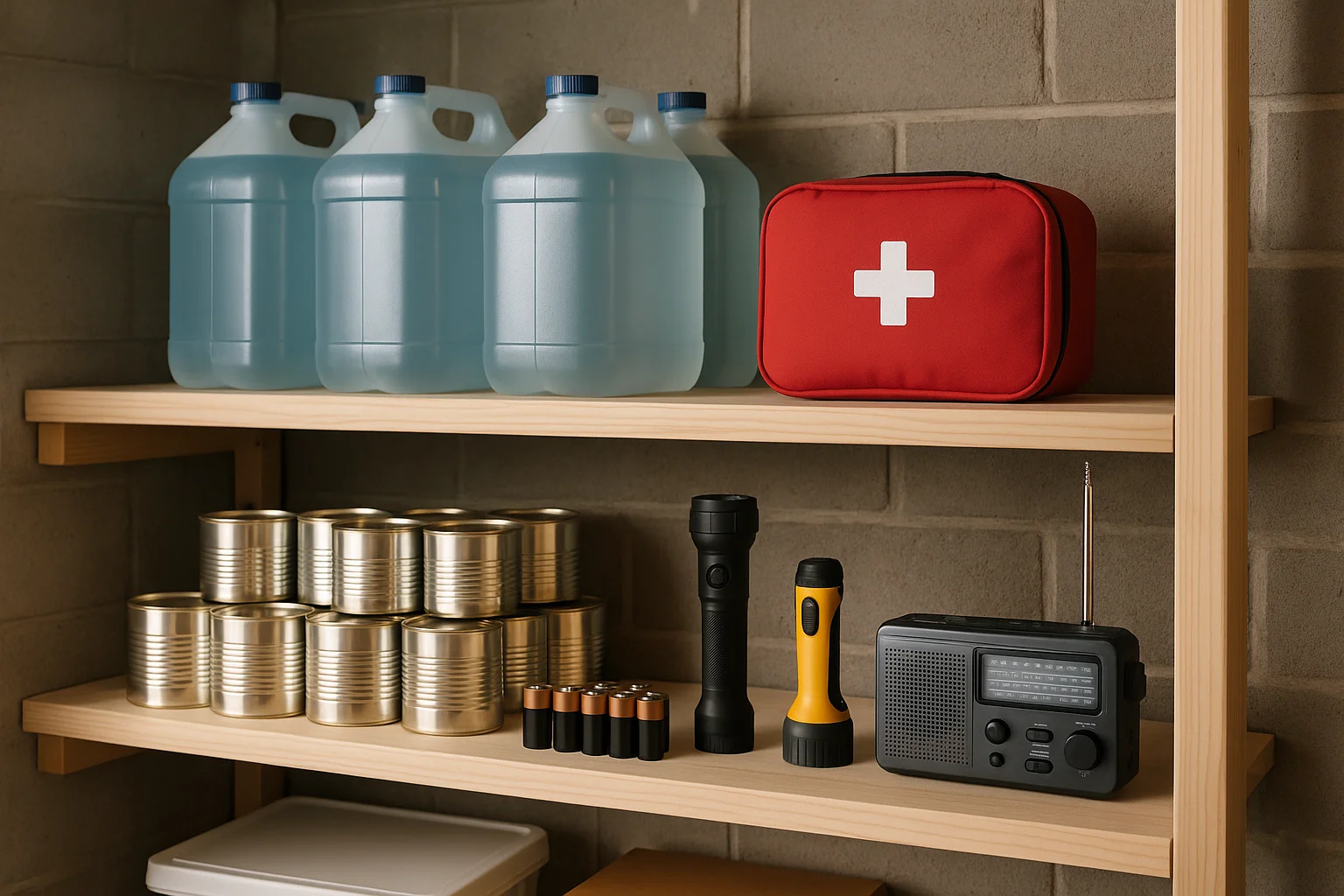
Germany's Federal Office for Civil Protection (BBK) recommends 10 days of supplies. The official list has gaps: water filtration, cash, communication, medications, and heating without electricity are missing. Three tiers: 10 days (200 EUR), 30 days (500 EUR), 90 days (1,500 EUR). Most realistic threats in 2026: power outage (72h), cyberattacks on infrastructure, supply chain disruption. FIFO rotation prevents expired supplies.
Germany's Federal Office for Civil Protection (BBK) has recommended for years that households store at least 10 days' worth of supplies. Most Germans have enough for 2-3 days. In a serious crisis, that's not enough.
This guide takes the official BBK checklist as a starting point, shows you its gaps, builds three budget packages, and explains which threat scenarios are realistic in 2026. No doomsday fantasy, just sober risk management.
The BBK checklist: What's officially recommended
The BBK recommends per person for 10 days:
| Category | Amount (10 days, 1 person) | Examples |
|---|---|---|
| Water | 20 liters (2L/day) | Drinking, cooking, minimal hygiene |
| Grain products | 3.5 kg | Pasta, rice, oats, bread/crispbread |
| Vegetables/legumes | 4 kg | Canned goods, pickled vegetables, dried lentils |
| Fruit/nuts | 2.5 kg | Canned fruit, dried fruit, nuts |
| Dairy/fats | 2.6 kg + 0.4 kg | UHT milk, hard cheese, cooking oil, ghee |
| Meat/fish | 1.5 kg | Canned (tuna, corned beef), dried meat |
What's missing from the BBK list
The official recommendation covers food but ignores critical areas. Six gaps you need to close yourself:
- Water filtration: 20 liters lasts 10 days. Then what? A water filter (Sawyer Squeeze, ~35 EUR) removes bacteria and protozoa from rainwater, streams, or your bathtub. Plus: Micropur tablets as backup.
- Cash: No power = no card payments = no ATMs. Keep 500-1,000 EUR in small bills (5s, 10s, 20s) at home. Not in your account, not in the bank.
- Communication: Cell towers fail during extended outages (typically 2-4 hours of battery backup). A battery-powered radio (DAB+/FM) receives emergency broadcasts. For person-to-person comms: PMR446 radios (from 25 EUR per pair).
- Medications, chronically ill: store at least 3 months of prescription medications. For everyone: painkillers, anti-diarrheal, wound disinfectant, bandages, personal medicine cabinet.
- Heating without electricity: A power outage in January is a different matter than in July. Petroleum heater (100-200 EUR, ventilate!), sleeping bag (comfort temp 0°C), sleeping pad. If you have a fireplace: store firewood for at least 2 weeks.
- Lighting: Headlamp (hands-free work), candles (long-duration, mind fire safety), crank or solar flashlight as backup. Sufficient batteries/rechargeable cells.
Note
The BBK list isn't bad, it's just incomplete. It covers food solidly but assumes power, water, and communication will keep working. In a serious crisis, that's exactly what fails.
Three tiers: 10, 30, and 90 days
Start with the base tier and work your way up. Each tier builds on the previous one.
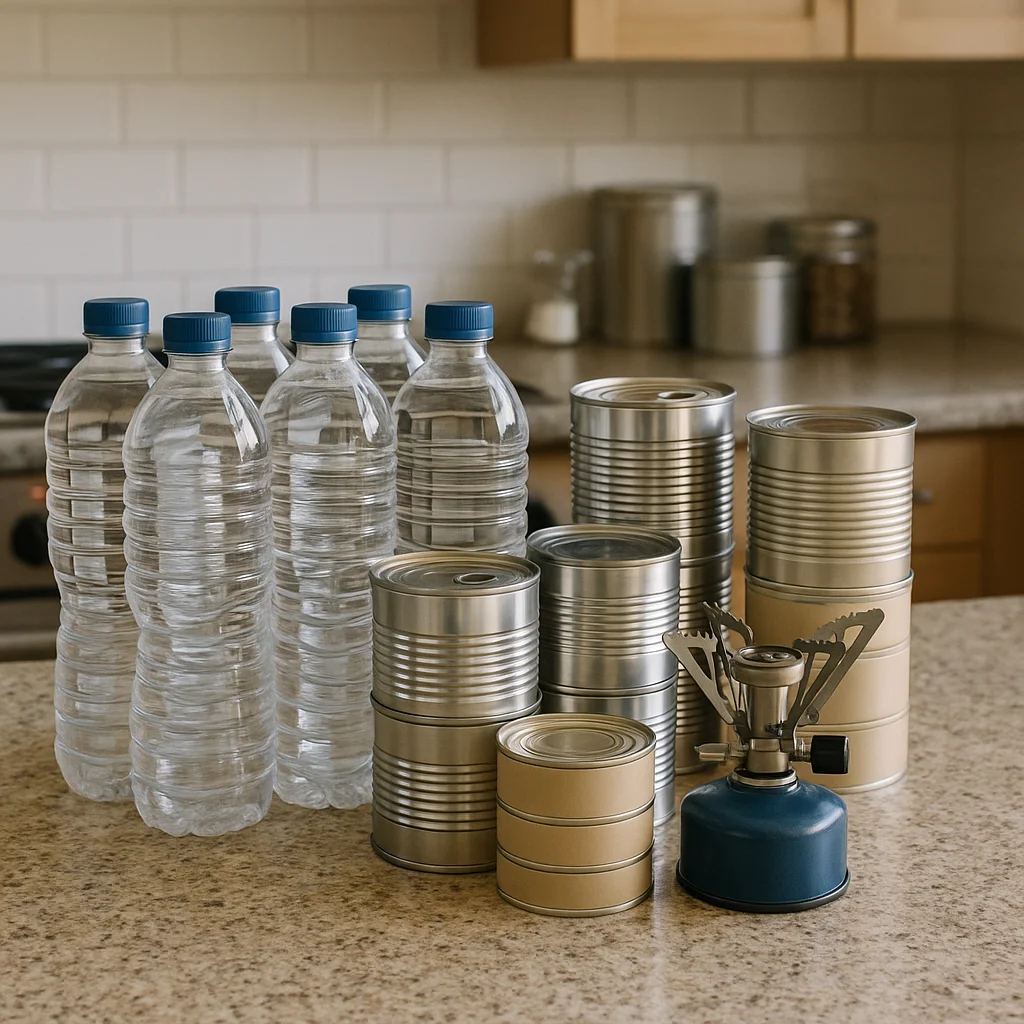
- Tier 1 (10 days, ~200 EUR/person): BBK supplies + water filter + cash + headlamp + radio. Covers the most likely scenarios: short power outage, supply disruption, severe weather. Achievable in one week.
- Tier 2 (30 days, ~500 EUR/person): Extended supplies + camp stove + PMR radios + medication stockpile + petroleum heater/sleeping bag. For extended crises, pandemic lockdowns, regional disasters.
- Tier 3 (90 days, ~1,500 EUR/person): Long-term food (freeze-dried, long-life cans) + solar panel (100W + power station) + quality water filter (Berkey/Katadyn) + CB radio + garden starter kit. For when infrastructure stays down longer.
Proper storage: FIFO rotation and shelf life
Supplies forgotten in the basement that expire help no one. Storage by principle:
- FIFO (First-In-First-Out): New supplies to the back, old to the front. What goes in first gets consumed first. Mark every package with purchase/best-before date.
- Storage conditions: Cool (under 20°C ideal), dark, dry. No direct sunlight, no moisture. Basement or utility room are ideal.
- Integrate into daily life: Buy canned goods and dry products you'd eat anyway, just in double quantity. This way the stockpile rotates automatically and nothing goes to waste.
Tip
Keep a simple inventory list (spreadsheet or app). Check best-before dates every 3 months and consume what's expiring soon. This keeps your stockpile fresh at all times.
Threat scenarios 2026: What's realistic
No zombie apocalypse. These scenarios are real and probable:
- Power outage (72h realistic in winter): The European grid is stable but not invulnerable. Winter peaks with high demand and low solar production are the critical phase. The BBK requires operators of critical infrastructure to maintain emergency power for at least 72 hours without external resupply.
- Cyberattacks on infrastructure: Water utilities, energy providers, and logistics companies are regularly attacked. A successful attack on water supply or logistics chains would disrupt regional supply for days.
- Supply chain disruption: COVID showed how fragile just-in-time supply chains are. Supermarkets carry 2-3 days of stock. Any major disruption (pandemic, port blockade, strike) leads to empty shelves quickly.
Important
Emergency preparedness isn't distrust of the government. The BBK itself urges citizens to prepare because authorities and relief organizations can't help everyone simultaneously in the first 72 hours of a major event. You take care of yourself so responders can focus on those who can't.
Frequently asked questions about emergency preparedness
Are 10 days of supplies really enough?
For the most likely scenarios (short power outage, severe weather, regional disruption), yes. For longer crises, we recommend at least 30 days. The 10 days are a minimum, not the optimum.
How do I store water long-term?
Fill food-grade containers (5-20 liters) with tap water, store in dark and cool conditions. Swap every 6 months. Alternatively, commercially sealed bottled water keeps practically indefinitely. Plus: a water filter as a long-term solution.
Do I need a generator?
For most households, no. A 100W solar panel with a power station (500-1,000 EUR) is quieter, lower maintenance, and needs no fuel. It runs your phone, radio, lights, and a small fridge. A gasoline generator only makes sense for larger loads.
How much cash should I keep at home?
500-1,000 EUR in small bills (5s, 10s, 20s). Nobody can make change for large bills in a crisis. This covers 2-4 weeks of basic supplies if card payments and ATMs are down.
Isn't emergency preparedness overkill?
Germany's own Federal Office for Civil Protection recommends 10 days of supplies. If you carry liability insurance, you're insuring against unlikely events. Emergency preparedness is the same principle: low cost, high value when it matters.