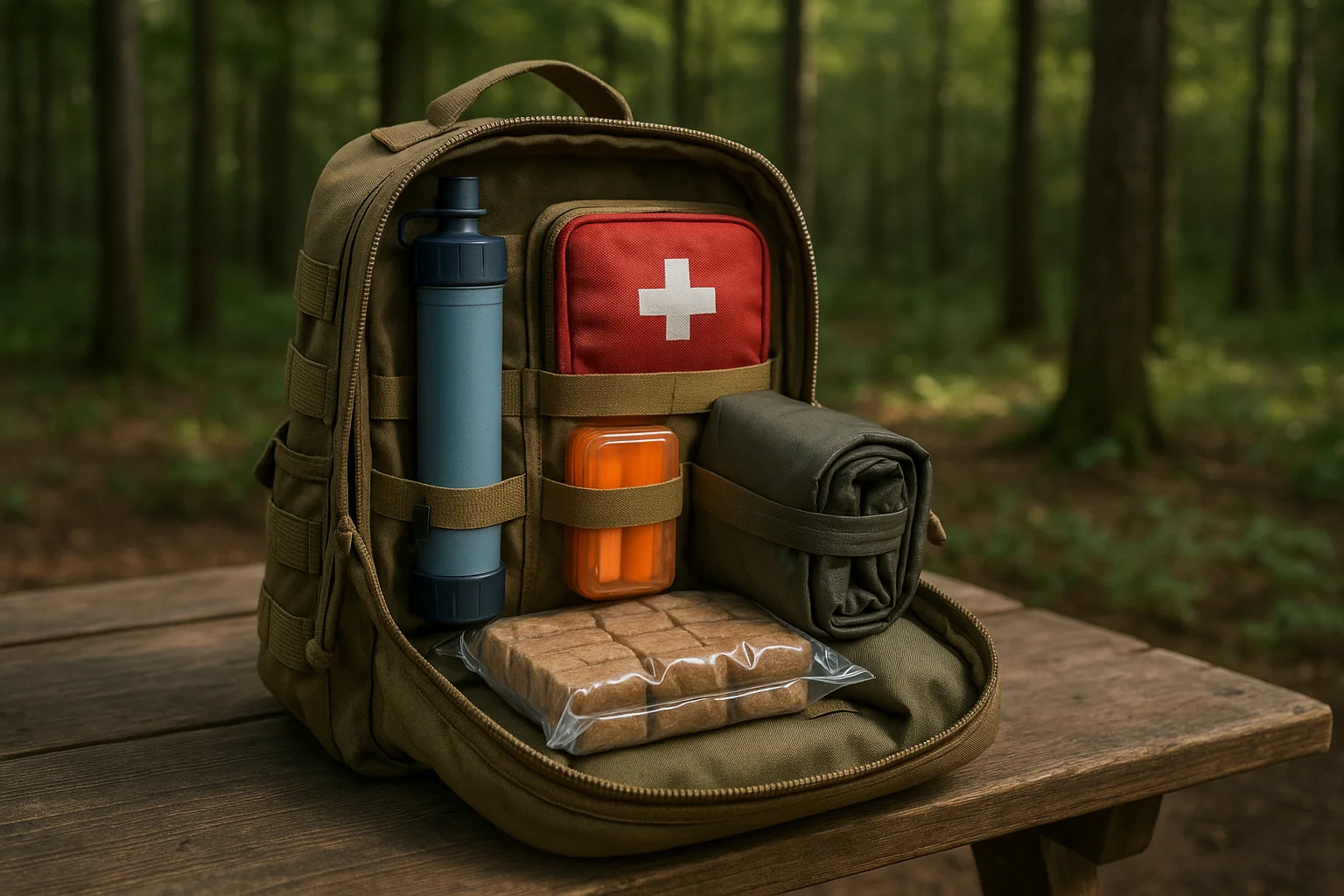
TL;DR
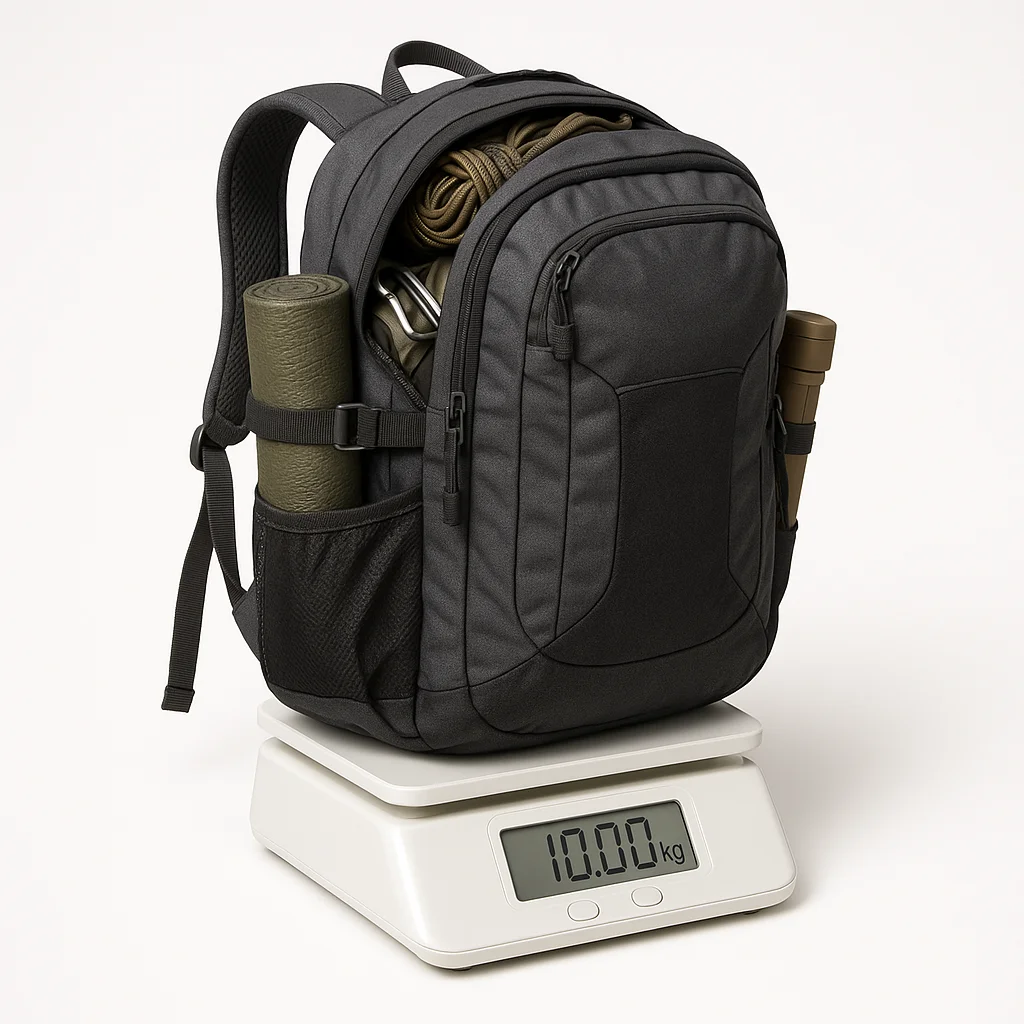
A bug-out bag (BOB) bridges 72 hours, nothing more. Realistic weight: 8-12 kg. Most common mistake: too heavy (you won't carry 25 kg for 50 km). Contents: backpack, water+filter, food, shelter, clothing, first aid, fire+light, tools, documents+cash, communication. Mandatory test: 10 km hike with full pack.
The internet is full of bug-out bag lists weighing 30 kg and containing more tactical gear than an infantry squad. Reality: you'll have to carry this pack. Under stress. Possibly with your family. Weight is the enemy.
This guide gives you a realistic packing list with weight figures, explains the differences between BOB, EDC, GHB, and INCH, and ends with the most important step that most people skip: the shakedown hike.
BOB, EDC, GHB, INCH: What's what?
- BOB (Bug-Out-Bag): 72-hour backpack for evacuation. Bridge until you reach safety or help arrives. 8-12 kg. This guide's focus.
- EDC (Every-Day-Carry): What you carry daily. Phone, keys, small knife, lighter, cash. Fits in pockets and jacket.
- GHB (Get-Home-Bag): Small pack to get you from work to home. Kept in the car or office. Lighter than a BOB (3-5 kg), for 12-24 hours.
- INCH (I'm-Never-Coming-Home): Long-term evacuation pack. 20-30 kg. For extreme scenarios where you don't return. Unrealistic and unnecessary for most people.
The 72-hour principle
A BOB isn't a weeks-long survival kit. It bridges 72 hours until you reach a safe location (relatives, emergency shelter, another region). In Germany, the most likely evacuation scenarios are regional: flooding, chemical accident, or wildfire.
Weight reality check: Why 25 kg doesn't work
Most BOB lists online add up to 20-30 kg. Sounds manageable until you have to walk with it. Some facts:
- An untrained adult manages 10-15 km per day with a 25 kg pack before knees, shoulders, and feet protest.
- Under stress (evacuation, time pressure, family), performance drops significantly. Plan for 60-70% of your normal capacity.
- Children, elderly, and people with physical limitations carry even less. Plan for the weakest person in your group.
Realistic target: 8-12 kg for 72 hours. Ambitious but achievable. Every gram needs to earn its place.
The complete packing list with weights
| Category | Contents | Weight |
|---|---|---|
| Backpack | 30-40L, hip belt, rain cover | 1.5 kg |
| Water + filter | 2L bottle + Sawyer Squeeze | 2.5 kg |
| Food (72h) | Energy bars, nuts, dehydrated meals | 1.5 kg |
| Shelter | Tarp (3x3m) + sleeping pad (folding) | 1.5 kg |
| Clothing | Change of socks, underwear, rain jacket | 1.0 kg |
| First aid | Compact kit + personal medications | 0.5 kg |
| Fire + light | Lighter, ferro rod, headlamp | 0.3 kg |
| Tools | Knife, paracord (15m), multitool | 0.3 kg |
| Documents + cash | Copies on USB drive, 200 EUR, ID copy | 0.2 kg |
| Communication | Crank radio, signal whistle | 0.2 kg |
| Total | ~9.5 kg |
3 variants: urban, rural, vehicle
- Urban BOB: Focus on documents, cash, medicine, compact food. Less shelter gear since you'll likely end up in an emergency shelter or with relatives. Inconspicuous urban clothing.
- Rural BOB: Focus on shelter, water (filter), fire. You may be outdoors longer before reaching accommodation. Tarp, sleeping bag, water filter are mandatory.
- Vehicle BOB: Can be heavier (15-20 kg) since you're not carrying it. Additionally: jumper cables, tow rope, blankets, drinking water canister, fuel reserve. Kept accessible in the trunk.
The 6 most common BOB mistakes
- Too heavy: 25 kg sounds feasible on paper. After 5 km on asphalt with blisters forming, the world looks different. Stick to the 10 kg limit.
- Too much tactical gear: Three knives, a tomahawk, MOLLE pouches everywhere. You're not a soldier, you're a civilian getting your family to safety. One knife is enough. A plain backpack beats a tactical one.
- No practical experience: You've never used your water filter, never set up your tarp, never tested your lighter in rain. Every item must be tested before a crisis.
- Food you don't actually like: Survival bars and freeze-dried meals you've never tasted. Pack food you know and enjoy. Morale matters as much as calories in a crisis.
- No document copies: ID, insurance policies, land registry, account numbers. All on an encrypted USB drive and as paper copies in the pack. In an emergency, you'll need these faster than a second knife.
- No shakedown hike: The most important point. Pack the bag and walk 10 km with it. What hurts? What's missing? What comes back out? One shakedown hike is worth more than a hundred packing lists on the internet.
Tip
Update your BOB twice a year (spring/fall). Check food expiration, swap batteries, adjust clothing for the season. A BOB is not a one-time project.
Important
In the vast majority of scenarios in Germany, staying put is safer than fleeing. The BOB is for the few cases where you must leave home (evacuation, flooding, chemical accident). Don't flee when staying is the better option.
Frequently asked questions about bug-out bags
Which backpack works for a BOB?
30-40 liter capacity, padded hip belt (transfers weight from shoulders to hips), rain cover or waterproof material. No tactical look; a standard hiking pack. Deuter, Osprey, or Gregory in the 120-160 EUR range are solid options.
What does a complete BOB cost?
200-400 EUR for a solid basic setup. The backpack itself is often the most expensive item. Much can be sourced cheaply: surplus tarp, water filter on sale, food from the supermarket.
Does every family member need a BOB?
Everyone who can carry should have one. Children aged 8-10+ can carry a light pack (3-5 kg) with their own clothing, snacks, and water bottle. For toddlers and babies: integrate their needs (diapers, food, medication) into your pack.
Where should I store my BOB?
Within reach but out of the way. Hallway coat rack, utility room, or next to the front door. You need to grab it and go within 2 minutes. Not in the basement, not in the attic, not in a locked cabinet.
Do I need a weapon in my BOB?
No. In Germany, carrying weapons is strictly regulated and counterproductive in an evacuation situation. A good knife as a tool makes sense. Anything beyond that creates more problems than it solves.