TL;DR
Earth building is the oldest construction technique in the world and perfect for beginners. Three starter projects: cob oven (200 EUR, 2 days), earth plaster for an interior wall (50-100 EUR, 1 day), oven bench (150 EUR, 1 day). Basic cob recipe: 1 part clay/earth : 3-4 parts sand : straw by feel. Garden structures are permit-free in Germany; residential buildings need structural analysis and a building permit.
Clay is the most democratic building material in the world. It sits beneath your feet, costs almost nothing, and forgives beginner mistakes. Yet most people never attempt their first earth building project because the technique seems mysterious. It isn't.
This guide walks you through the materials, gives you three concrete projects with budgets and time estimates, and clarifies the permit situation for Germany.
Materials: What you need and where to find it
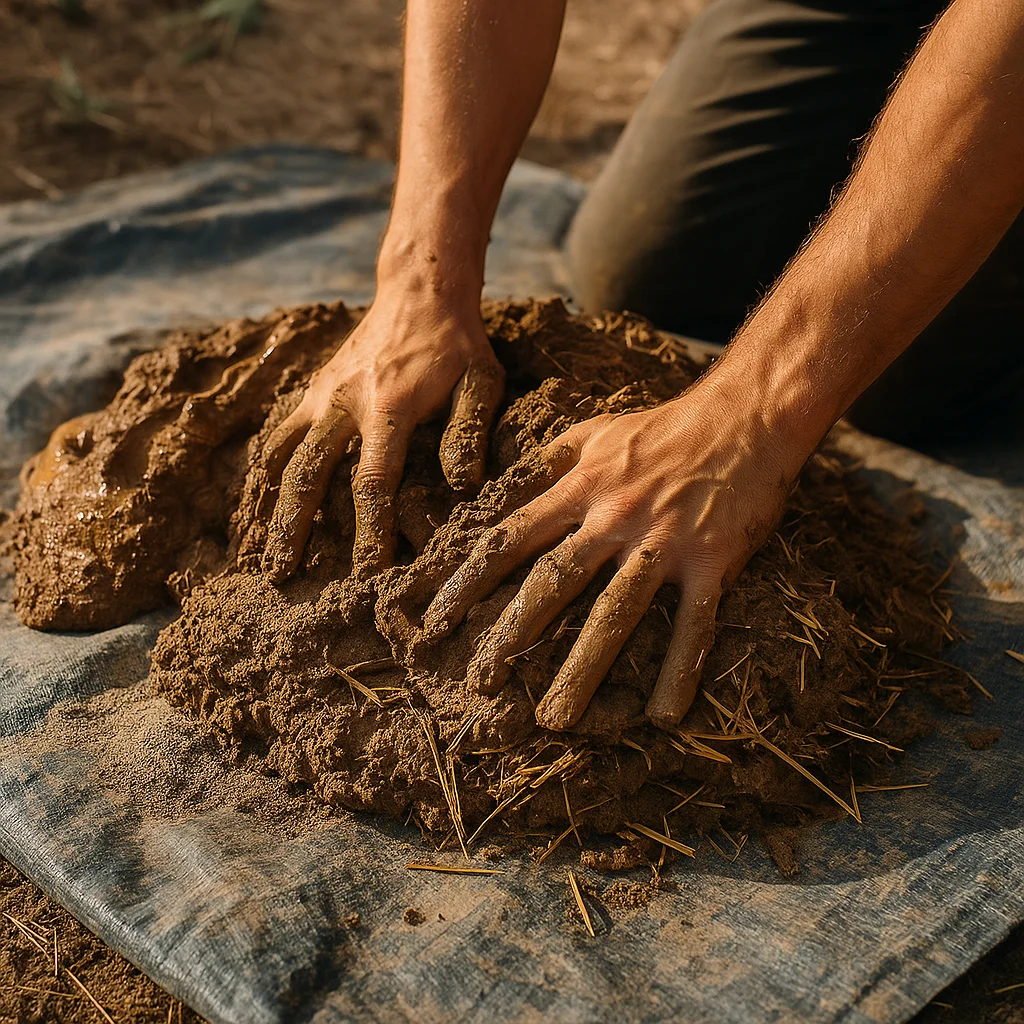
Earth building is based on three ingredients. The art lies in the mixing ratio.
- Clay/earth: A natural mix of clay, silt, and sand. Often available in your own garden. Dig 30-50 cm deep, below the topsoil. The earth should be sticky when wet. Alternatively, buy building clay from a building supply store (~15-18 EUR per 25 kg as of 2026).
- Sand: 0-4 mm grain size, washed. No play sand (too fine), no beach sand (salty). Builder's sand from a building supply dealer, ~30 EUR per ton. Sand gives the clay structure and prevents cracking during drying.
- Straw: Rye straw is ideal because it's long and tear-resistant. Wheat straw also works. The fibers reinforce the clay like rebar reinforces concrete. Available from farmers or equestrian centers for 3-5 EUR per bale.
Cob mixing ratio
Basic recipe: 1 part clay/earth : 3-4 parts sand : straw by feel. Test: form a fist-sized ball and drop it from 1 m height. It shouldn't fall apart (too much sand) or flatten (not enough sand). Slight cracking is fine.
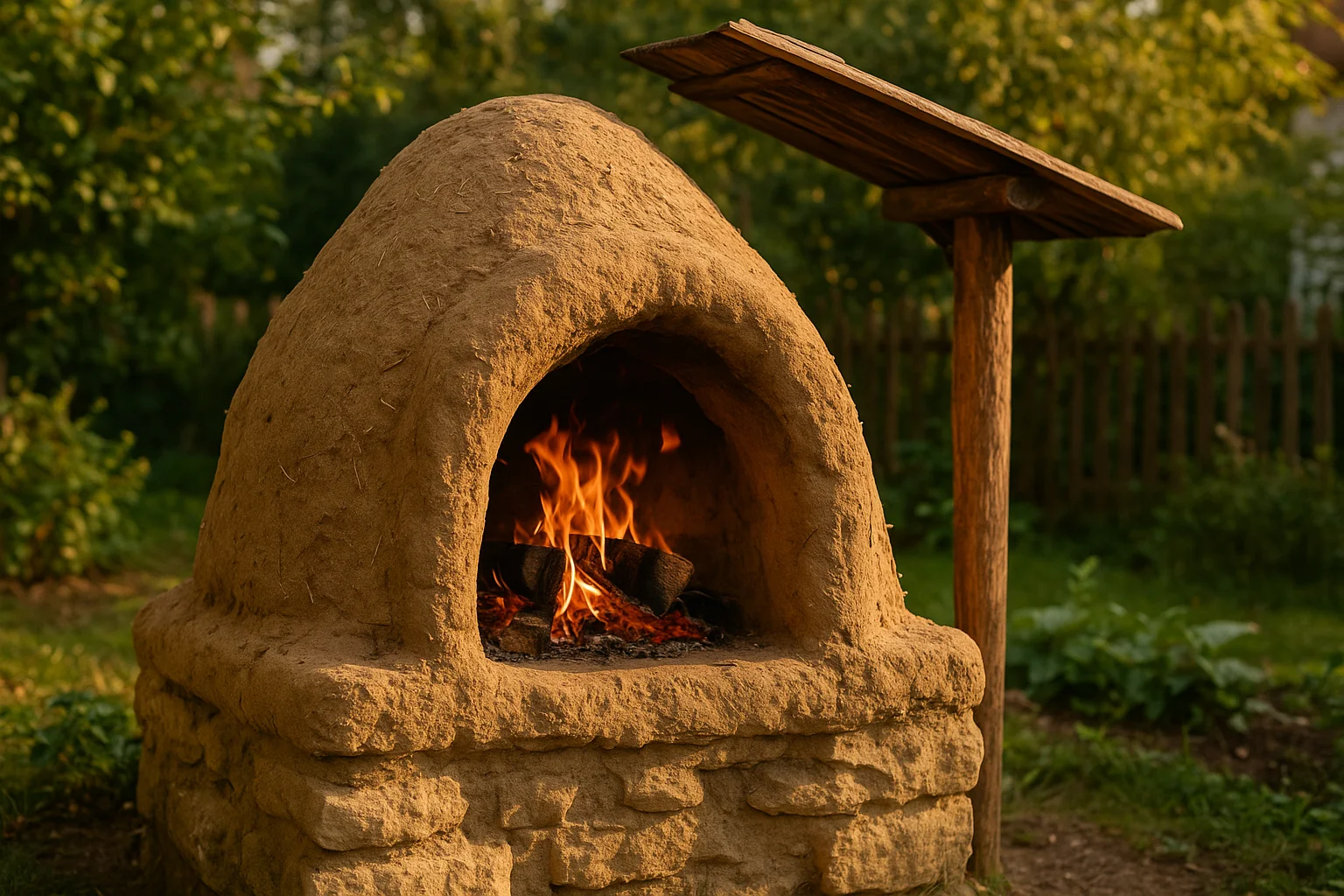
Project 1: Building a cob oven (200 EUR, 2 days)
A cob oven in the garden is the best starter project. You learn all the basic techniques and end up with something you'll actually use. Pizza and bread from your own cob oven taste incredible.
- Build the foundation: Sturdy base from bricks or aerated concrete blocks, working height ~80-100 cm. Must bear the weight (200-300 kg) and keep ground moisture away. Insulation layer on top: 10 cm perlite-clay mix or empty glass bottles in clay.
- Lay the oven floor: Place firebricks on the insulation layer. Tight together, without mortar. These bricks store heat and form the baking surface.
- Build the sand form: Shape damp sand into a dome on the firebricks. This dome defines the oven's interior. Typical: 60-80 cm diameter, 40-50 cm height. Cover with wet newspaper so the cob releases later.
- Apply the cob layer: Build a 10-15 cm thick cob layer evenly over the sand form. Work in two layers: first one without straw (thermal layer), then one with straw (structural layer). Leave the door opening clear (~60% of the interior height).
- Let it dry: Allow 2-4 weeks of drying, depending on weather. Protect from rain! Scrape out the sand through the door opening. Start with small fires to slowly drive out residual moisture. Heating too fast causes cracks.
Projects 2 and 3: Earth plaster and oven bench
| Detail | Earth plaster (interior) | Cob oven bench |
|---|---|---|
| Budget | 50-100 EUR | 150 EUR |
| Time | 1 day | 1 day |
| Construction | Base coat with straw, finish coat sanded smooth | Wooden frame + cob cladding |
| Sealing | Casein or linseed oil | Linseed oil or beeswax |
| Difficulty | Easy | Easy to medium |
Earth plaster: Perfect if you want to try earth building indoors first. Throw the base coat (coarse sand and short straw) onto the dampened wall at 1-2 cm thickness. After it dries slightly, apply the finish coat: fine sand, no straw, smooth with a trowel. Finally, seal with diluted casein or linseed oil to prevent dusting.
Oven bench: A wooden frame of battens or pallets forms the basic structure. Build cob over it, smooth the seat surface, and let it dry. Optional: run your wood stove's flue pipe through the bench for a heated seat.
Tip
Earth plaster regulates indoor humidity. A clay-plastered wall absorbs moisture in humid conditions and releases it when the air is dry. This noticeably improves indoor climate.
Permits: What you can build without authorities
The permit situation depends on what you're building:
- Garden structures (oven, bench, privacy screen): Generally permit-free. No load-bearing structures, no habitable space. Check your state's building code for exact limits.
- Earth plaster indoors: Permit-free. You're not altering the load-bearing structure. Earth plaster on masonry or drywall is treated like any other plaster.
- Residential buildings in earth construction: Building permit required. Structural analysis by an engineer. DIN 18945-18948 governs the requirements for earth building materials.
Important
A cob oven gets extremely hot during use. Keep at least 1 m distance from combustible materials. Don't place it under trees or wooden roofing. Having a fire extinguisher within reach is not an overreaction.
The 5 most common earth building mistakes
- Too little sand: The most common mistake. Too-rich clay cracks when drying. Do the ball test and adjust the ratio.
- Drying too fast: Clay must dry slowly. Direct sun and wind speed up drying but cause cracks. Cover with damp cloths in hot weather.
- No rain protection: Clay dissolves in rain. Every earth structure needs a roof or cover. "A good hat and good boots" is the earth building rule: roof on top, foundation on the bottom.
- Heating the oven too fast: Small fires over several days first. Residual moisture needs to leave slowly, otherwise steam pressure cracks form.
- Wrong straw: No fresh, green grass. Only dry straw. Damp organic material molds inside the clay and weakens the structure.
Frequently asked questions about earth building
Can I use clay from my garden?
Yes, if it has enough clay content. Dig below the topsoil (30-50 cm). Do the ball test: if you can form a ball that holds together, you have usable clay. Most garden soils in Germany contain sufficient clay.
How long does a cob oven last?
With rain protection, 10-20 years. Small cracks are normal and can be patched with fresh clay. Without rain protection, the oven dissolves within a few years. A simple roof of corrugated metal or wood is sufficient.
How does earth building compare in cost to conventional construction?
Material costs are minimal since clay and sand cost almost nothing. The investment is in labor time. For small projects (oven, plaster), you save 70-80% compared to conventional solutions. For entire buildings, this levels out due to structural engineering requirements and longer build times.
Is clay approved as a building material in Germany?
Yes. DIN 18945-18948 regulates earth building blocks, earth mortar, and earth plaster as standardized building materials. This makes clay a legally recognized building material in Germany. Load-bearing constructions require structural analysis, same as with any other material.
Can I build with earth in winter?
Not outdoors. Clay must not freeze before it's fully dried. Frost destroys the structure. Earth plaster in a heated interior works year-round. For outdoor projects, the best time is May through September.