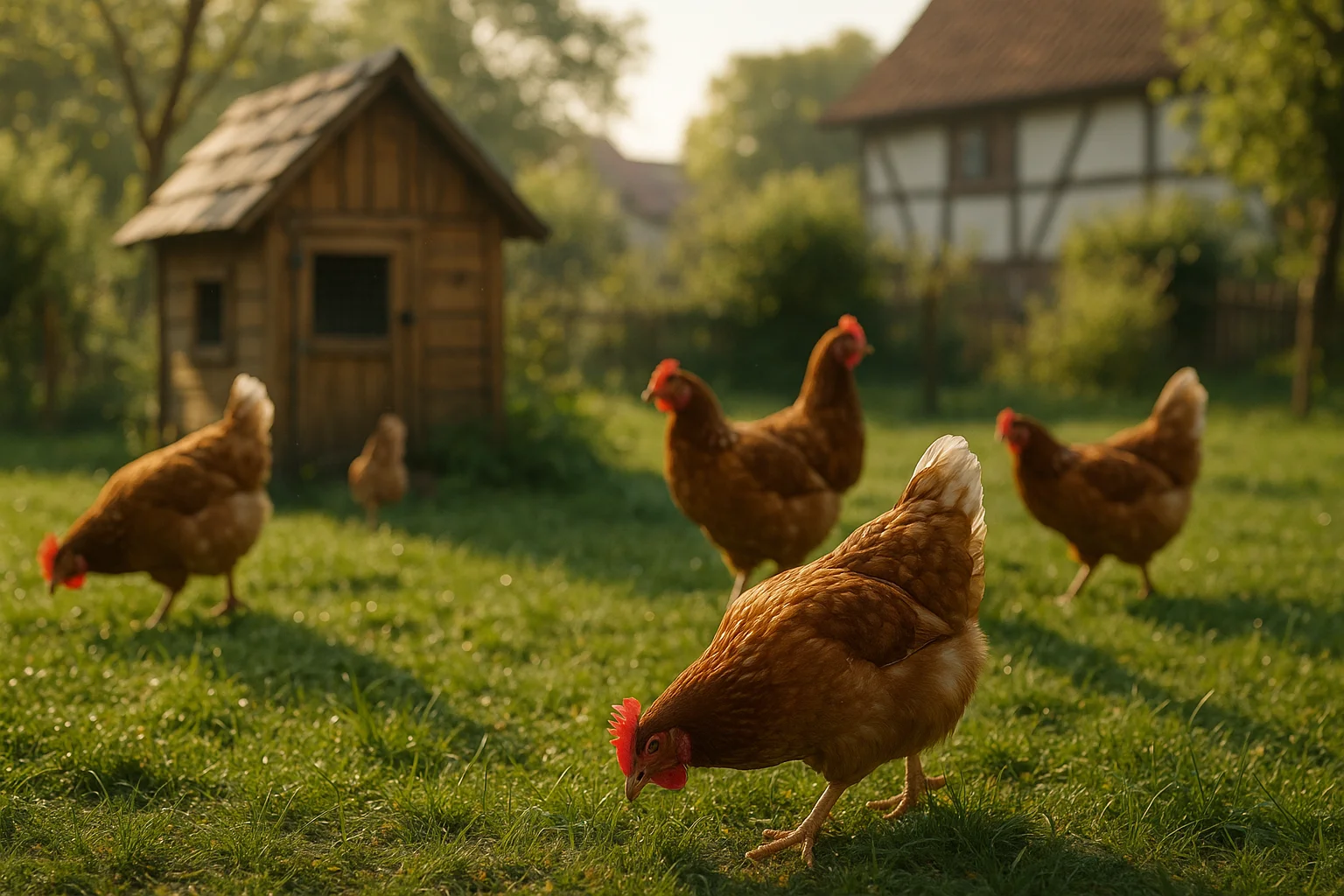
Keeping your own chickens means fresh eggs, a lively garden, and a lot of work nobody tells you about upfront. Before you start, you need three things: a clear legal framework, the right coop, and an honest cost calculation. This guide gives you everything in the right order.
TL;DR: In Germany, registering with the veterinary office and animal disease fund is mandatory from day one. Budget 400-800 EUR for coop and equipment plus ongoing ~50 EUR per chicken per year for feed. In return, each hen gives you 150-250 eggs per year, costing effectively ~30 cents per egg.
Legal Requirements: What to Clarify Before Your First Chicken
Chickens are livestock. That sounds obvious, but it has consequences. Unlike dogs or cats, keeping even one chicken triggers registration and documentation requirements in Germany.
- Veterinary office: Registration required within 14 days of acquisition. Free of charge but mandatory. Gives you a registration number.
- Animal disease fund: Mandatory contribution from the first chicken. Cost: 2-5 EUR per animal per year depending on state. Provides compensation in case of disease outbreak.
- Building permit: Mobile coops for up to ~20 chickens typically don't require one. Permanent structures above a certain size may need permits (varies by municipality).
- Neighbor regulations: Setback rules vary by municipality (often 3-5 m from property line). Roosters can become problematic (noise). Hens are generally allowed in residential areas; roosters are often disputed.
- Vaccination requirement: Newcastle Disease (ND) vaccination is mandatory in Germany. Must be refreshed every 6 weeks via drinking water, or annually by veterinary injection. Vaccine available through vet or poultry vaccination groups.
These five points sound bureaucratic, but in practice they're done in an afternoon: one call to the veterinary office, one form for the animal disease fund, one check of local building rules. Handle this before your first chicken arrives, and everything after that is just managing the flock itself.
Important
Failing to register with the veterinary office or animal disease fund risks fines and loss of all compensation claims in case of disease outbreak. This isn't a recommendation; it's a legal obligation.
Choosing the Right Breed: 5 Recommendations for Beginners
Not every chicken suits every keeper. For beginners, robust, calm breeds with good egg production are ideal. Here are five proven starter breeds:
| Breed | Eggs/Year | Egg Color | Temperament |
|---|---|---|---|
| Sussex | ~250 | Light brown | Calm, friendly, family-suitable |
| Araucana | ~200 | Green/Turquoise | Robust, active, weather-hardy |
| Marans | ~200 | Dark brown | Calm, efficient feed converter |
| Bielefelder | ~230 | Light brown | Large, winter-hardy, auto-sexing |
| Vorwerk | ~170 | Cream white | Active, excellent foragers, flighty |
For starters, I recommend 4-6 hens of one breed. This way you learn that breed's behavior and avoid pecking-order issues from mixing very different sizes. A rooster isn't needed for egg production but can calm the flock and alert them to predators.
Coop Design and Run: Minimum Requirements and Practical Tips
The coop is the biggest investment and the most common mistake. Too small, poorly ventilated, or not predator-proof, and you'll have problems from day one.
- Coop space: Minimum 0.5 m2 per chicken inside the coop. For 6 chickens, that's at least 3 m2 of coop floor space.
- Run: Minimum 10 m2 per chicken. For 6 chickens, you need 60 m2 of fenced run. More is always better.
- Perches: 25 cm per chicken, at least 50 cm above the floor. Round cross-section (4-5 cm diameter) or rounded edges.
- Nesting boxes: 1 nest per 4 hens. Darkened, with bedding, slightly elevated. Size approx. 30x35 cm.
- Dust bath: A shallow container (60x80 cm) with sand-ash mix. Chickens need this for feather care and parasite prevention.
- Predator protection: Close coop at night (automatic door recommended). Bury fence or add apron against foxes. Net above against hawks if under 6 chickens without rooster.
Most of these figures are minimums, not targets. If you build the coop tight, you won't notice the shortfall until the chickens themselves start pecking and squabbling over the missing space. Building a bit larger the first time costs somewhat more upfront but saves you a second build once the flock grows.
Daily Routine and Feeding
Chickens don't need hours of your day, but they need reliability. Every day, 365 days a year. Here's your standard routine:
- Morning: Open coop (or automatic door): Check: Are all chickens healthy and mobile? Eyes clear, comb red, feathers smooth? Note any abnormalities immediately.
- Check feed and water: Top up layer feed or grain mix. Fresh water daily. In summer, change water more often (algae). Offer oyster shell grit separately (calcium for eggshells).
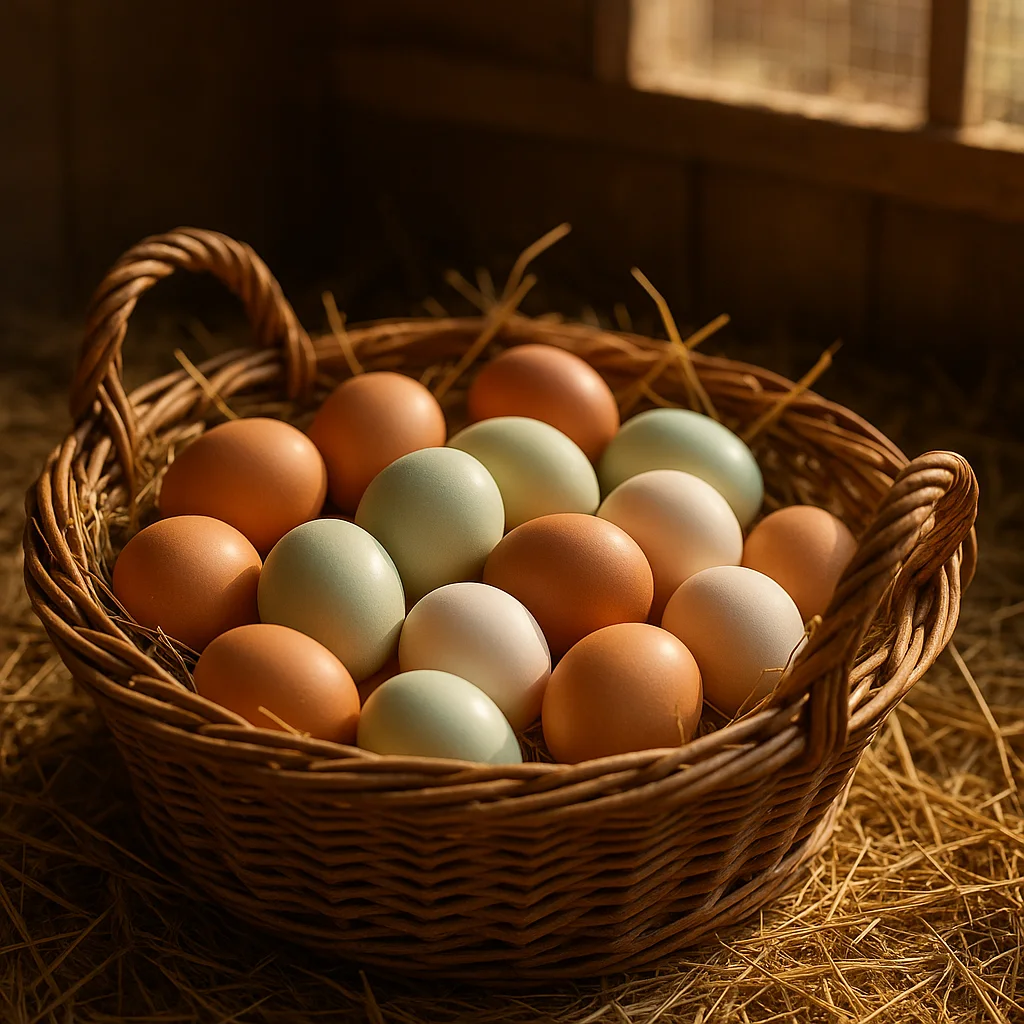
- Collect eggs: Daily, ideally midday or afternoon. If eggs sit too long, hens start eating them. Check nests for cracks.
- Evening: Close coop: All chickens must be inside. Count them! One chicken left outside means one dead chicken the next morning (fox, marten). An automatic door with light sensor is the best investment.
- Weekly: Muck out coop: Change bedding (straw or hemp), clean droppings board under perches. Fresh bedding in nests. Full deep-clean every 4-6 weeks.
Tip
Kitchen scraps as supplementary feed: lettuce, vegetables, cooked potatoes, pasta are fine. Not allowed: citrus, raw potatoes, avocado, highly seasoned food, chocolate. No raw meat (disease prevention).
What Chickens Really Cost: An Honest Calculation
The most common question: Is it financially worth it? Here's the honest answer with real numbers for 5 chickens:
| Item | Cost | Note |
|---|---|---|
| Coop (DIY) | 300-500 EUR | Pre-built: 500-1500 EUR |
| Fence + netting (60 m2) | 100-200 EUR | Poultry fence 1.2 m + posts |
| Automatic door | 80-150 EUR | Optional but highly recommended |
| 5 hens (pullets) | 50-100 EUR | 10-20 EUR per young hen |
| Feed (per year) | 250 EUR | ~50 EUR/chicken/year (organic layer) |
| Bedding (per year) | 60-100 EUR | Straw or hemp bedding |
| Vet/vaccination | 30-50 EUR/year | ND vaccine + deworming |
| Cost per egg (effective) | ~30 cents | At 200 eggs/hen/year, running costs only |
For comparison: organic eggs at the supermarket cost 40-50 cents. Financially, own keeping only pays off after 2-3 years once the initial investment is amortized. The real benefit is quality: you know exactly what your chickens eat and how they live.
Common Diseases and Prevention
Healthy chickens in a clean coop with good feed rarely get sick. But you should know the most common issues:
- Red mite: Most common parasite. Hides in crevices during the day, sucks blood at night. Symptoms: pale combs, nighttime restlessness, drop in egg production. Prevention: treat coop regularly with diatomaceous earth, seal crevices.
- Coccidiosis: Intestinal parasite, especially in young chickens. Symptoms: bloody diarrhea, lethargy. Prevention: keep coop dry, change bedding regularly, introduce young chickens to free-range gradually.
- Egg binding: Egg stuck in oviduct. Symptoms: hen straining, puffed up, won't leave nest. Immediate action: warm sitz bath; if unsuccessful, go to vet immediately.
- Newcastle Disease (ND): Highly contagious virus, notifiable disease. Vaccination is mandatory and protects reliably. Without vaccination, your entire flock can die within days.
Three of these four problems (mites, coccidiosis, egg binding) trace directly back to coop hygiene and housing conditions; only Newcastle Disease is a pure infection risk that cleanliness alone doesn't prevent. Keep the coop and bedding maintained, and you've already handled most of the prevention work.
Note
Find a poultry-experienced vet in your area BEFORE getting chickens. Not every small-animal vet knows poultry. Poultry vaccination groups offer affordable ND vaccination and advice on problems.
Frequently Asked Questions About Keeping Chickens
Do I need a rooster for eggs?
No. Hens lay without a rooster. The rooster only fertilizes eggs for reproduction. Without one, your eggs are unfertilized and perfectly edible. A rooster can calm the flock and alert to aerial predators though.
How long do chickens live and lay?
Chickens live 5-10 years. Best egg production is in years one and two. After that, production drops about 20% each year. From year 4-5, most hens lay only sporadically.
Can I keep chickens in a residential area?
Generally yes. Chickens are classified as small animals and are allowed in residential areas. A rooster may be problematic due to crowing. Talk to your neighbors first and check local regulations.
What about holidays/vacations?
An automatic door, large feeder, and nipple drinker bridge 2-3 days. Longer than 3 days, you need someone to collect eggs daily, check water, and monitor the birds. Arrange this BEFORE getting chickens.
How do I protect my chickens from foxes?
Always close the coop at night (automatic door!). Bury fence at least 30 cm or lay a ground apron. Electric fencing is the safest solution. Martens can squeeze through small gaps, so seal all openings over 3 cm.