Self-sufficiency sounds like freedom: your own vegetables, independence from the supermarket. Reality looks different. Most beginners start with oversized plans, invest in the wrong things, and give up after one frustrating summer. It doesn't have to be that way.
This guide shows you what you can realistically achieve in your first year, the right sequence to follow, and which mistakes you can avoid. No Instagram idyll, just solid numbers and a plan that works.
What self-sufficiency actually means
Self-sufficiency isn't binary. Nobody is 100% self-sufficient, not even full-time farmers. There are levels, and each one has value.
| Level | Self-supply | Typical setup |
|---|---|---|
| 1: Starter | 5–15% | Herb bed, balcony tomatoes, own sprouts |
| 2: Garden | 15–30% | 50–100 m² bed space, seasonal vegetables, canning |
| 3: Expansion | 30–50% | 200+ m², potatoes, fruit trees, storage |
| 4: Advanced | 50–70% | Animals (chickens, bees), greenhouse, seed saving |
| 5: Subsistence | 70–90% | Full-time farming, grain, dairy animals, energy independence |
Note
100% self-sufficiency is neither achievable nor sensible for most people. Even experienced homesteaders buy flour, oil, salt, and spices. The goal is resilience, not isolation.
How much space do you need per person?
The space question is always the first one asked. The answer depends on what you want to grow and what level of self-supply you're targeting.
| Crops | m² per person | Source |
|---|---|---|
| Vegetables (without potatoes) | 60–80 m² | Wurzelwerk (field-tested) |
| Potatoes (additional) | ~90 m² | Wurzelwerk |
| Berry bushes + fruit trees | ~140 m² | Practical average |
| Total (veg + potatoes + fruit) | 250–300 m² | Combined |
For a family of four, that means 1,000–1,200 m² of pure growing space for substantial vegetable and fruit self-sufficiency. Start small. 20–30 m² is plenty for the beginning. On that space, you can supply yourself with salad, tomatoes, zucchini, and herbs through the summer while learning the basics.
The right sequence: water, stockpile, garden, animals
The most common beginner mistake: starting at the wrong end. Buying chickens before the garden is established. Planting fruit trees without knowing how to water. Sequence matters.
- Sort out your water supply: Nothing grows without water. Figure out well, rainwater collection, or mains connection before you build a single bed. A garden needs 20–30 liters per m² per week in midsummer.
- Build a basic stockpile: Stock up on staples (rice, pasta, legumes, canned goods). Your garden produces little in year one. A stockpile bridges the gap and gives you room to learn.
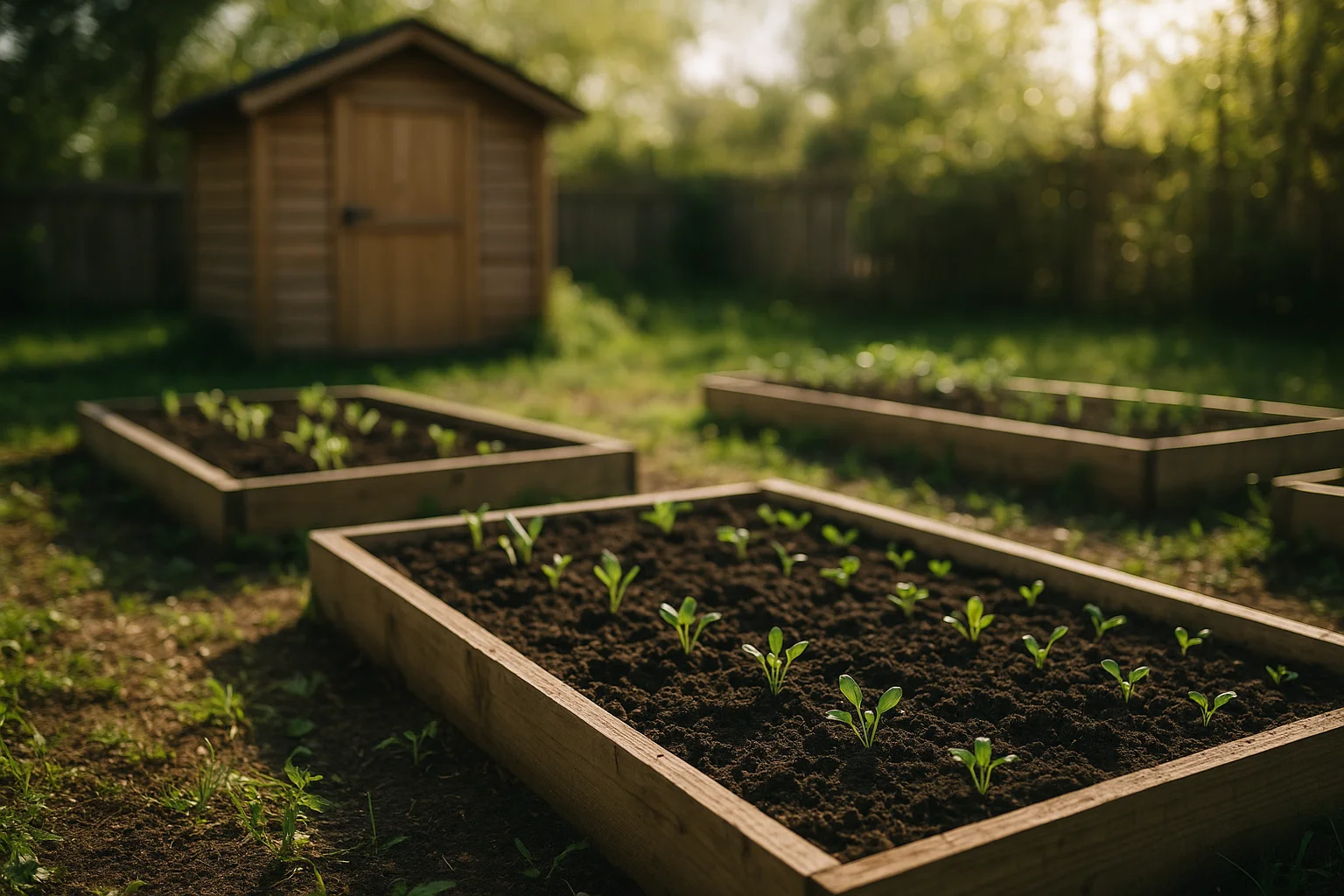
- Start the garden: Start small: 2–4 raised beds or 20–30 m² of ground beds. Focus on easy, productive crops: zucchini, beans, lettuce, tomatoes, chard. No exotic experiments in year one.
- Learn to preserve: Without preservation, your vegetables disappear within weeks. Freezing, canning, fermenting, drying. Master at least one method solidly in your first year.
- Animals (year 2 at the earliest): Chickens, bees, or other animals only after the garden is running. Animals need daily care, 365 days a year. That's a different league from watering beds.
Your 12-month plan for the first year
This plan starts in spring (March). If you begin in autumn or winter, use those months for planning, soil improvement, and stockpiling.
| Month | Focus | Key tasks |
|---|---|---|
| 1–2 (Mar–Apr) | Planning + Soil | Test soil (jar test), build beds, start compost, pre-sow cool crops (lettuce, kohlrabi) |
| 3–4 (May–Jun) | Planting + Building | After last frost: tomatoes, zucchini, beans, squash go out. Mulch beds. Set up rainwater collection. |
| 5–6 (Jul–Aug) | Maintaining + Harvesting | Watering, pruning tomatoes, first harvest. Preserve surplus. Second sowing (winter lettuce, lamb's lettuce). |
| 7–8 (Sep–Oct) | Harvest + Preserve | Main harvest: potatoes, squash, beans. Preservation in full swing. Plant garlic. Sow cover crops. |
| 9–10 (Nov–Dec) | Evaluate + Plan | Winterize beds. Apply mulch. Review: what worked? Order seeds for next year. |
| 11–12 (Jan–Feb) | Learn + Prepare | Create year 2 growing plan. Research open-pollinated varieties. Maintain tools. Keep a garden journal. |
The 5 most common beginner mistakes
- Too much at once: 20 different varieties in year one, fruit trees, chickens, and a greenhouse all at the same time. Result: everything half-done, nothing done properly. Start with 5–8 vegetable varieties and do them well.
- Ignoring the soil: Throwing seeds into unprepared ground and hoping for the best. Soil is everything. A simple jar test tells you if you have sand, silt, or clay. A pH strip costs 5 euros and saves you from a dismal harvest.
- No plan for the harvest: In August, you're staring at 15 kg of zucchini with nowhere to put them. Preservation must be planned before the harvest, not after. Stock up on jars, a canning pot, or freezer space in advance.
- Underestimating the winter gap: From November to March, almost nothing grows in Central Europe. If you stop planning in October, you face five months with no home-grown produce. Winter vegetables (kale, lamb's lettuce, claytonia) and storage crops (potatoes, squash, carrots) are the solution.
- Perfectionism over resilience: Slugs will ravage your lettuce beds. Aphids will come. Tomatoes will rot. That's part of it. If you quit after the first setback, you've missed the point of self-sufficiency: it's about learning, not perfection.
Tip
Keep a garden journal. Note what you sowed when, what the weather was like, and what worked. In your second year, this journal will be invaluable.
What you don't need in year one
The self-sufficiency scene runs partly on selling you gear. Not everything recommended is actually needed right away. Save yourself in year one:
- No greenhouse. Open-air vegetables are enough for starters. A greenhouse only pays off once you know what you want to grow.
- No expensive equipment. Spade, garden fork, hoe, watering cans. That's it. The 800-euro robotic mower can wait.
- No animals. Not in year one. Learn to keep plants alive before taking responsibility for living creatures.
- No permaculture certification. Permaculture is great, but in year one you need practice, not theory.
- No seed saving. Buy proven open-pollinated varieties in year one. You can start saving seeds from year two onward.
Remember
Your realistic goal for year one: reliably grow 5–8 vegetable varieties, master one preservation method, and understand your soil. Anything beyond that is a bonus.
What does getting started actually cost?
Self-sufficiency saves money long-term, but starting up has a cost. Here's an honest breakdown for getting started with 20–30 m² of bed space:
| Item | Cost |
|---|---|
| Basic tools (spade, fork, hoe, watering cans) | 80–150 EUR |
| Seeds (10–15 packets, open-pollinated) | 25–40 EUR |
| Compost / mulch | 30–80 EUR |
| Raised beds (2x, wood) | 60–200 EUR |
| Rain barrel (200 liters) | 30–60 EUR |
| Canning jars + canning pot | 50–100 EUR |
| Total (minimal setup) | 275–630 EUR |
Tip
You can get much of this secondhand: tools from flea markets, canning jars from neighbors, compost from your local recycling center. That easily cuts the startup budget in half.
Frequently asked questions about self-sufficiency for beginners
Can you be self-sufficient on a balcony?
Partially. On 5–10 m² of balcony space, you can grow herbs, tomatoes, peppers, and lettuce. Full self-sufficiency isn't possible, but you'll learn the fundamentals and save on herbs in summer.
How much time does self-sufficiency take per week?
At the starter level (20–30 m²), expect 3–5 hours per week in summer and 1–2 hours in winter. During harvest season (July–September), it can temporarily spike, especially when canning.
Does self-sufficiency actually save money?
Rarely in year one. Startup costs eat the returns. From year two, costs drop significantly because tools and infrastructure are in place. Long-term, you can save 50–150 EUR per month on food if you grow and preserve consistently.
What vegetables are easiest for beginners?
Zucchini, bush beans, chard, radishes, and lettuce. These crops forgive mistakes, grow fast, and produce reliably. Tomatoes are worthwhile too but need a bit more care (pruning, rain protection).
Do I need an allotment garden or is my backyard enough?
Both work. An allotment garden (typically 200–400 m²) offers more space but is often subject to allotment regulations. Your backyard has the advantage of proximity. Start wherever you have access.
Is self-sufficiency possible in the city?
Yes, with limitations. Urban gardening on a balcony, rooftop, or in community gardens works for herbs, salad, and summer vegetables. For meaningful self-supply, you need more space, typically available as a rented allotment.