TL;DR
Four radio systems for crisis comms in Germany: PMR446 (license-free, 25 EUR, 1-5 km), Freenet (license-free, DE only, 80 EUR, 3-8 km), CB radio (license-free, 60 EUR, 5-20 km), HAM radio (license required, unlimited range). For most households, PMR446 is the best starting point. Real-world range is significantly less than manufacturer claims.
Cell tower battery backups last 4-8 hours. After that, it's over. In an extended power outage, you're cut off from communication if you don't have a Plan B. Radio is that Plan B.
This guide compares the four relevant radio systems for Germany, debunks range myths, clarifies the legal situation, and gives you concrete device recommendations under 100 EUR.
The 4 radio systems compared
All four work without internet or cell coverage, but they differ sharply in range, cost, and legal overhead. The table gives you the headline numbers, the details follow below.
| System | Frequency | Power | Range (real) | License | Device from |
|---|---|---|---|---|---|
| PMR446 | 446 MHz | 0.5 W | 1-5 km (urban 500m-2km) | No | 25 EUR |
| Freenet | 149 MHz | 1 W | 3-8 km | No (DE only) | 80 EUR |
| CB radio | 27 MHz | 4W AM / 12W SSB | 5-20 km | No | 60 EUR |
| HAM radio | Many | up to 750 W | Unlimited (HF/repeaters) | Yes (Class N/E/A) | 30 EUR (used) |
Range honesty: What manufacturers don't tell you
The box says "up to 10 km." In reality:
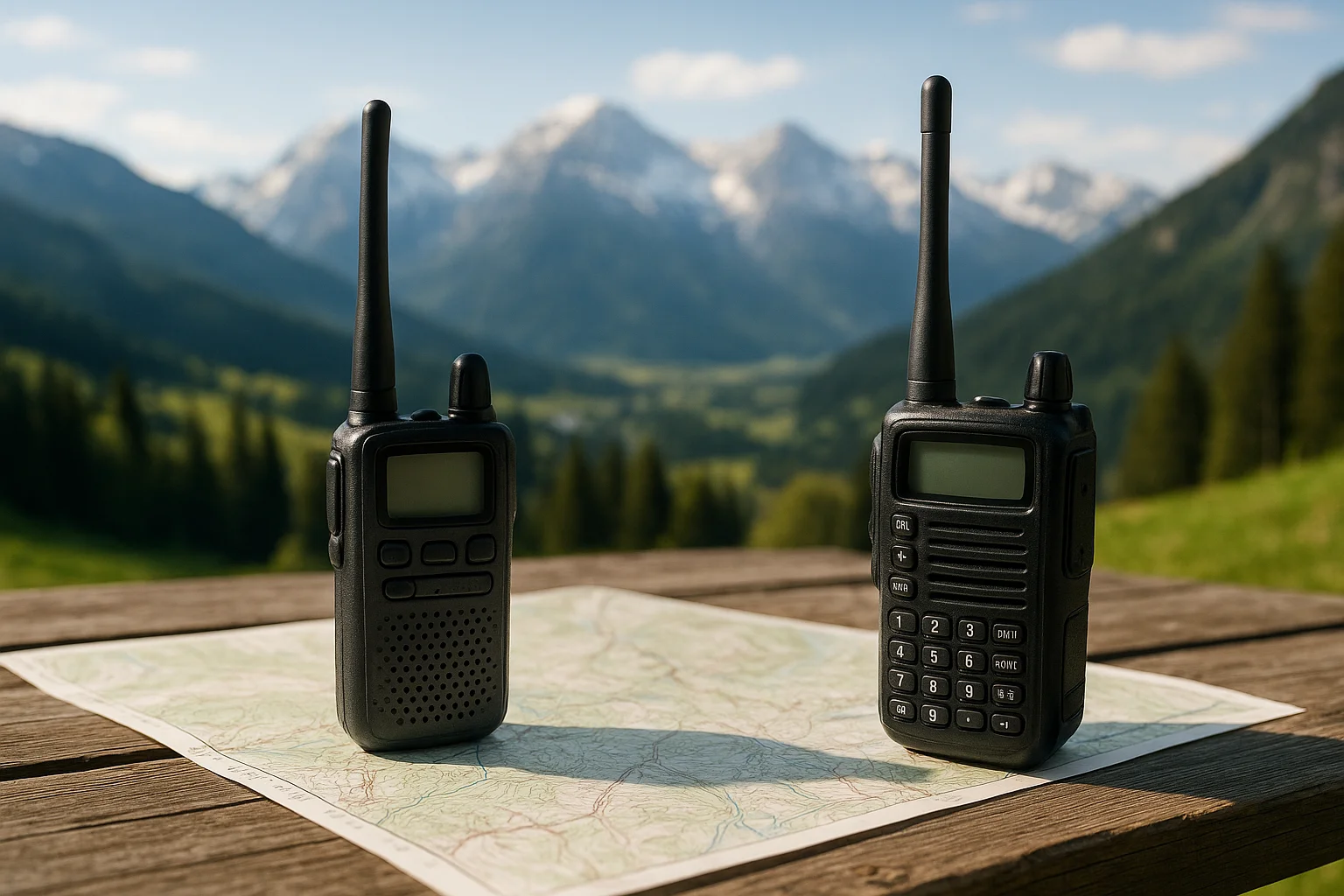
- PMR446 in the city: 500 m to 2 km. Buildings, cars, and street canyons absorb the signal. In open terrain 2-5 km, hilltop to hilltop up to 8 km.
- Freenet: The lower frequency (149 MHz) penetrates buildings and vegetation better. 3-8 km real, more with favorable topography.
- CB radio: Greatest range among license-free systems. 5-20 km real, significantly further in SSB mode with 12W. Downside: interference-prone, larger devices, longer antennas.
- HAM radio: With repeater stations on hilltops: hundreds of kilometers. On HF (shortwave): worldwide. But: license required.
The common thread: every manufacturer figure assumes a clear line of sight with no obstacles, a scenario that barely exists in real life. When buying, plan generously for the lower half of the stated range.
Important
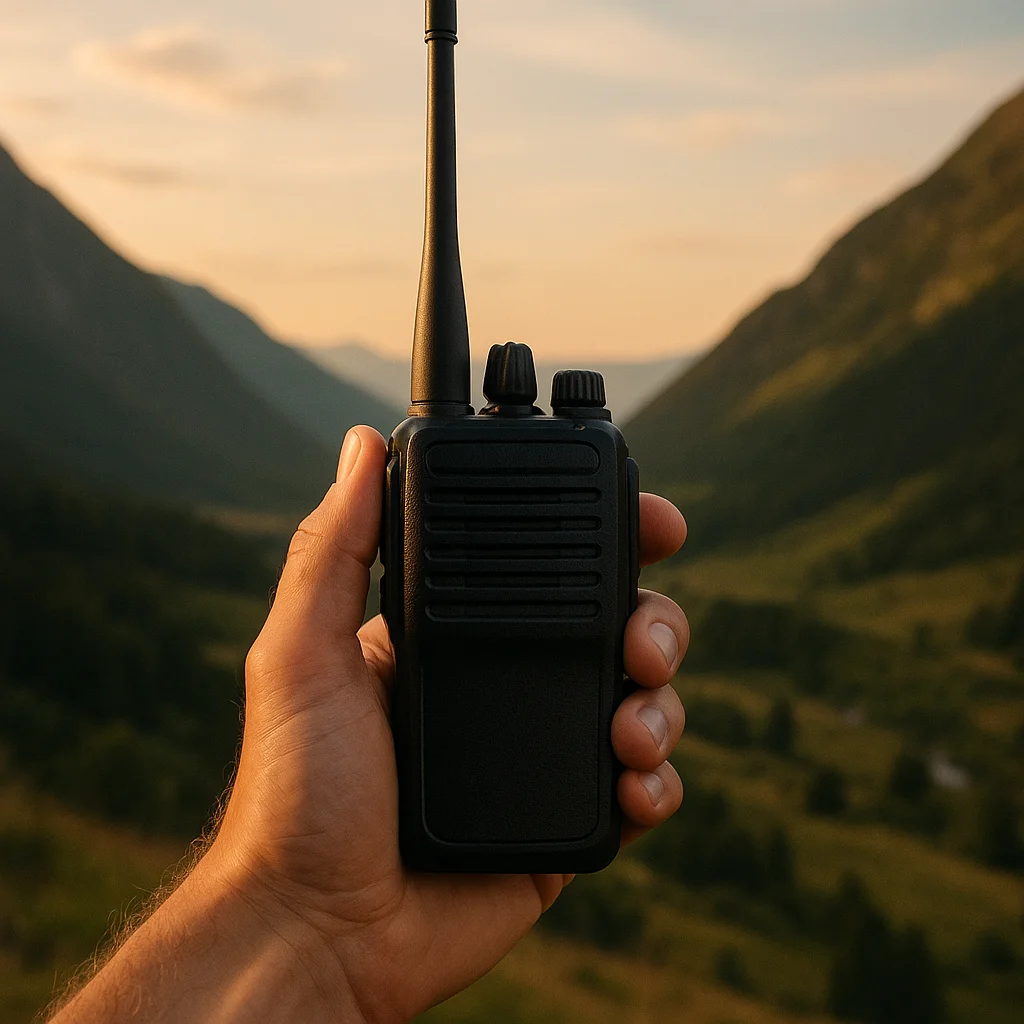
A Baofeng UV-5R is not a PMR device. It transmits at much higher power on unauthorized frequencies and is illegal in Germany without a HAM license. The Federal Network Agency (BNetzA) inspects and penalizes. Hands off without a license.
Licensing and law: What you can do without an exam
- PMR446: No registration, no license, usable EU-wide. Devices must be CE-marked with max 0.5 W power. Fixed antenna.
- Freenet: No registration, no license, but only authorized in Germany. 6 channels on 149 MHz, max 1 W. Changeable antenna allowed.
- CB radio: License-free since 2003. 80 channels, max 4W AM / 12W SSB. No callsign needed.
- HAM radio: Exam at the BNetzA required. Since 2024, Class N (simplified, multiple choice, ~80 EUR exam fee). Class E for medium power, Class A for all frequencies and full power.
Class N since 2024
The new entry-level Class N makes getting into HAM radio much easier. Multiple-choice exam, less study material than Class E, but access to VHF frequencies and repeater stations. Ideal if you want more range than PMR/CB offer.
Devices under 100 EUR
You don't need a fortune to be ready. These four picks cover all four systems, each one under 100 EUR:
- PMR: Motorola T82 (~60 EUR/pair). Rugged, IPX4 (splash-proof), built-in flashlight, 2-4 km real range. Or: Midland G9 Pro (~90 EUR/pair) for more range.
- Freenet: Albrecht Tectalk (~90 EUR/unit). The only relevant Freenet option. Better range than PMR due to lower frequency and swappable antenna.
- CB: Midland Alan 48+ (~80 EUR). Mobile CB radio, AM/FM, magnetic mount antenna for car or windowsill. Greatest range among license-free options.
- HAM (used): Baofeng UV-5R (~30 EUR). HAM license only! Extremely affordable, transmits on 2m and 70cm bands. Even cheaper at amateur radio flea markets. Without license: illegal.
Emergency frequencies in Germany
Memorize these frequencies for emergencies:
- PMR Channel 1 and 8: Unofficially used as emergency and calling channels. Channel 1 (446.00625 MHz) and Channel 8 (446.09375 MHz). Most likely to find other radio users here.
- CB Channel 9: Internationally defined as the emergency channel. Still occasionally monitored in Europe, especially by truckers and radio enthusiasts.
- HAM 145.500 MHz: FM calling frequency on the 2m band. Monitored by radio amateurs. In a crisis, likely the most active channel. Transmit only with a license!
- BOS digital radio: Police, fire, EMS. Encrypted, not accessible to civilians and not intended for civilian use. Receiving is legal, transmitting is a criminal offense.
Knowing these four frequencies does you no good if nobody around you knows them too. A plan made in advance matters more than the frequency list itself.
Tip
Agree with family and neighbors now on a radio channel and fixed times. Example: PMR channel 3, daily at 8:00 AM and 6:00 PM for 5 minutes. That way you know where to find each other in an emergency.
Frequently asked questions about crisis radio
Which radio system is best for beginners?
PMR446. Affordable (from 25 EUR per pair), license-free, EU-wide, ready to use out of the box. Range is limited, but perfectly adequate for communication within a village, neighborhood, or hiking group.
Can I use a Baofeng radio in Germany?
Only with a HAM license and only on HAM frequencies. Transmitting on PMR or Freenet frequencies with a Baofeng is illegal because it exceeds the authorized power limit. Receiving is legal, transmitting without a license is not.
How hard is the HAM radio exam?
Class N (since 2024): Easy. Multiple-choice exam covering radio technology basics and regulations. Achievable with 2-4 weeks of preparation. Class E: Medium difficulty, ~2-3 months. Class A: Demanding, ~6 months. Exam fee is about 80 EUR.
Does radio work during a power outage?
Yes, that's the whole point. PMR and CB devices run on batteries or rechargeable cells. A set of AA batteries lasts about a week with moderate use. HAM repeaters often have emergency power. Radio is the only form of communication that works without network infrastructure.