TL;DR
The 4% rule shows: every euro less in expenses reduces your required FIRE portfolio by 25 EUR. A homestead can save ~950 EUR/month (housing, energy, food, transport), lowering your FIRE target by 285,000 EUR. Break-even is ~13 years, but property value, quality of life, and resilience come on top.
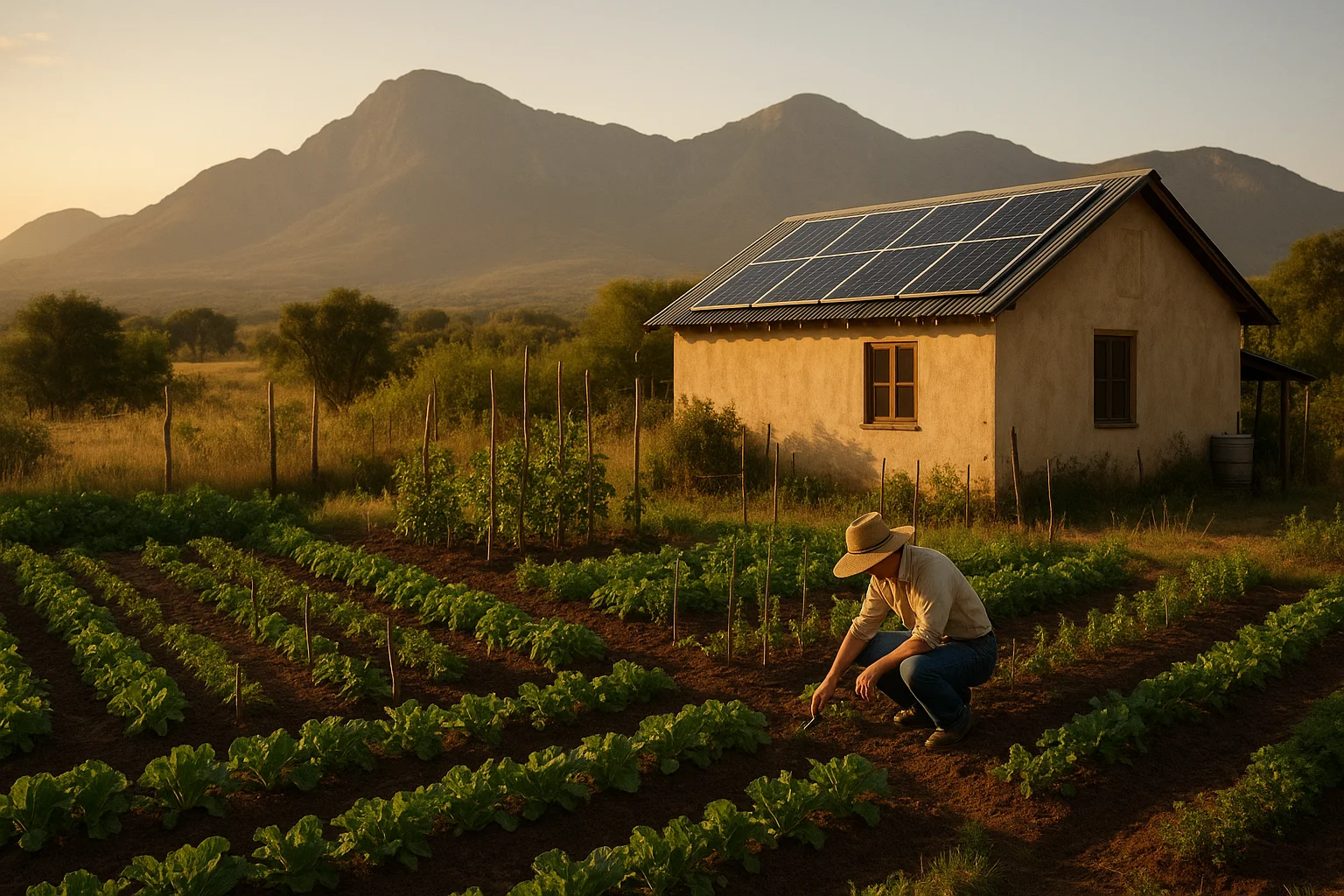
The FIRE community talks a lot about ETFs, savings rates, and the magical moment when the portfolio is large enough. What it talks less about: the expense lever is mathematically much stronger than the return lever. And a homestead is the most radical way to pull that lever.
This article shows why low expenses in the countryside deliver more than one extra percent of returns. With concrete numbers, a break-even calculation, and three hybrid models that sit between full-time homesteading and full-time employment.
The FIRE Math: Why Expenses Matter More Than Returns
The 4% rule states: you need 25 times your annual expenses as wealth to live off investments. That means:
| Annual Expenses | Required Portfolio (25x) | Monthly Withdrawal |
|---|---|---|
| 36,000 EUR | 900,000 EUR | 3,000 EUR |
| 30,000 EUR | 750,000 EUR | 2,500 EUR |
| 24,000 EUR | 600,000 EUR | 2,000 EUR |
| 18,000 EUR | 450,000 EUR | 1,500 EUR |
| 15,000 EUR | 375,000 EUR | 1,250 EUR |
The key insight: every euro you cut from monthly expenses reduces your FIRE target by 300 EUR (12 x 25). Conversely, 1% more return on 500,000 EUR yields exactly 5,000 EUR per year. The expense lever is almost always stronger.
The 4% rule is a rule of thumb
Based on the Trinity Study with US data. For a longer timeframe than 30 years or with European taxes, 3.5% is more conservative. The fundamental logic remains: low expenses beat high returns.
What a Homestead Realistically Saves
No wishful thinking, just conservative estimates based on real homesteaders in Germany:
| Area | Savings/Month | How |
|---|---|---|
| Housing | ~500 EUR | Own property vs. city rent (no rent, only utilities) |
| Energy | ~150 EUR | Solar + wood instead of grid electricity/gas |
| Food | ~200 EUR | ~40% self-sufficiency (vegetables, eggs, fruit) |
| Transport | ~100 EUR | Fewer trips (home office, short distances) |
| Total | ~950 EUR/month | = 11,400 EUR/year |
950 EUR less in monthly expenses means: your FIRE target drops by 285,000 EUR (950 x 12 x 25). That is years you can stop working earlier.
What a Homestead Costs: The Other Side of the Equation
A homestead is not a free gift. The honest investment breakdown:
- Land + buildings: 50,000-200,000 EUR in rural Germany. In eastern Germany and economically weaker areas, under 80,000 EUR is possible.
- Tools + infrastructure: 10,000-30,000 EUR over the first 5 years. Solar system, well, workshop, fencing, greenhouse, machinery.
- Time investment: 15-25 hours per week for farming, maintenance, and animal care. This is not a hobby but a part-time job.
The hidden costs
Property tax (200-800 EUR/year), building insurance (300-600 EUR/year), repairs (1,000-3,000 EUR/year). An old farmhouse is a construction site that never ends. Budget 3,000-5,000 EUR/year for ongoing maintenance.

Break-Even: When the Homestead Pays for Itself
The central question: if the homestead costs 150,000 EUR and you save 11,400 EUR per year, when do you recoup the investment?
- Pure cash flow calculation: ~13 years: 150,000 EUR / 11,400 EUR = 13.2 years. After that, you save net. Sounds long, but: you are living on your own property instead of paying rent during that time.
- Including property value: significantly earlier: The property retains its value (or appreciates). Your wealth is not gone, it is in land and buildings. Real break-even is reached after 5-8 years.
- Not quantifiable: resilience + quality of life: Your own food, your own energy, no landlord. This value does not appear in any spreadsheet, but for many it is the real reason.
3 Hybrid Models: FIRE Does Not Have to Be All-or-Nothing
Not everyone wants to (or can) quit entirely right away. These three models combine FIRE principles with a homestead:
- Coast-FIRE + homestead: You have invested enough that your portfolio will last to 67 (e.g., 200,000 EUR at age 35). The homestead covers your running costs. You need no further income but also do not need to build more wealth.
- Barista-FIRE + homestead: You work 10-15 hours per week (remote job, freelancing) and the homestead lowers your expenses to 1,000-1,200 EUR/month. The portfolio covers the rest.
- Lean-FIRE in the countryside: Full financial independence at 12,000-15,000 EUR annual expenses. Required portfolio: 300,000-375,000 EUR. Sounds low, but on a homestead in the countryside, it is realistic.
The best entry point
Start with Barista-FIRE. Buy the homestead, keep a part-time job, and build self-sufficiency simultaneously. After 3-5 years, you will know whether Lean-FIRE is realistic or whether you want to keep the part-time gig.
Frequently Asked Questions About FIRE and Homesteading
Does the property count toward the FIRE portfolio?
Traditionally no. Your FIRE portfolio is invested capital you withdraw from (ETFs, stocks, bonds). The property lowers your expenses (no rent) but does not count toward the portfolio. Still, it is an asset and a safety buffer.
How safe is the 4% rule for Europe?
The Trinity Study is based on US data. For Europe with lower historical returns and higher taxation, 3-3.5% is more conservative. A homestead as an expense buffer makes the 4% rule safer because you can withdraw less during downturns.
Can I achieve FIRE with a homestead and a family?
Yes, but with higher expenses. For a family of four on a homestead, budget 18,000-24,000 EUR/year (instead of 12,000-15,000 for a single person). More hands help with the work, and children learn priceless skills.
What if rural property prices drop?
If you live on the homestead, market value is secondary. You live rent-free regardless of what the market says. A price drop only matters if you want to sell. Since the homestead primarily reduces expenses, book value matters less than with a pure capital investment.
Should I pay cash for the homestead or take a mortgage?
For FIRE, debt-free is ideal because it minimizes mandatory monthly expenses. If your portfolio returns clearly exceed the mortgage rate, partial financing can make mathematical sense. But debt and FIRE mix poorly because the monthly payment increases your FIRE target.