TL;DR
Today's German master craftsman title has a centuries-old backstory: as early as the 13th century, Bavarian guilds organized trades under the same three-tier model of apprentice, journeyman, and master that, under different legal machinery, still exists today. Guilds lost their political power in 1548, but kept their economic monopoly until 1869. Alongside that lineage, a completely different, state-independent mentoring system exists today for self-sufficiency skills: the Permaculture Diploma, in which two experienced diploma-holders mentor each candidate through at least ten projects over a minimum of two years.
Why does the German master craftsman title still require a multi-stage training path with a journeyman stage and formal exams, instead of just issuing a certificate? The answer isn't in current law. It's a good seven and a half centuries earlier.
This article tells two mentoring stories that look unrelated at first glance but share the same underlying pattern: experienced practitioners passing knowledge to learners over years, through clearly staged milestones. First, the medieval guild, the real historical root behind the modern master-craftsman system. Then the Permaculture Diploma, a contemporary echo of the same idea that deliberately operates outside any state regulation.
Where the word "guild" actually comes from
In German, the word for guild, "Zunft," sounds like it's about trade today, but its root originally had little to do with that. It comes from Old High German "(ge-)zumft," meaning "community," "agreement," or "association," which in turn traces back to the verb "(gi-)zëman," "to be fitting" or "proper." At its core, the term doesn't describe a trade at all. It describes a group bound by shared rules, obligated to behave "properly" toward one another.
That's more than a linguistic footnote. It explains why guilds were never just economic associations from the start; they were social orders with their own rulebooks, their own jurisdiction over members, and their own codes of honor. The craft was the occasion. Communal rule-following was the actual core.
Augsburg: the earliest records of organized craft
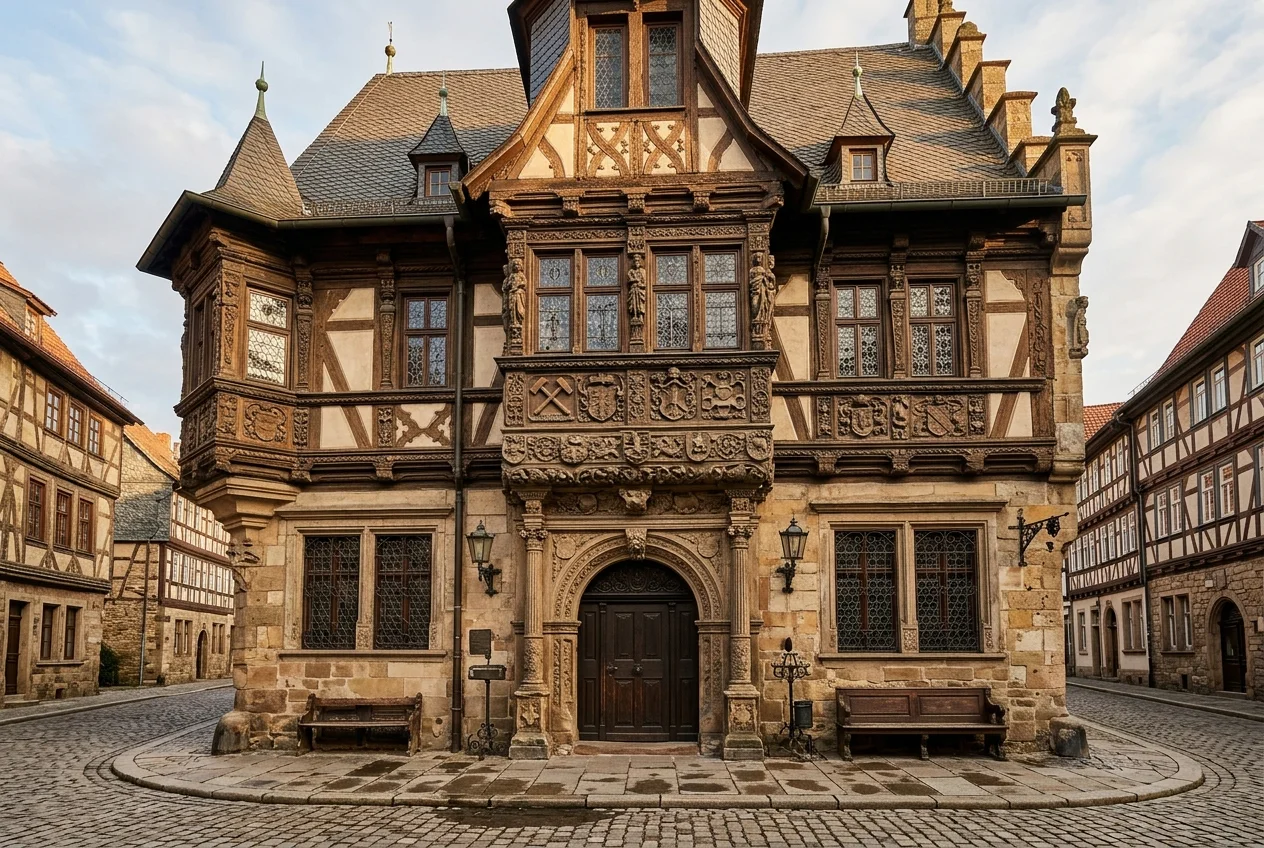
Augsburg documents how early this principle became practice better than almost anywhere else. Handicraft organizations are recorded there in city law as early as 1156, well into the High Middle Ages. Over two centuries later, on 16 December 1368, the city issued its "Second Guild Letter" (Zweiter Zunftbrief), which for the first time gave guilds formal political participation in city government. By then, craft work was long since more than a way to earn bread; it was a recognized political force.
Even more telling for anyone asking where today's training system comes from: apprenticeship regulation was already under guild control in Bavaria in the 13th century, following exactly the sequence that still exists today: apprentice, then journeyman, then master. That's the same three-tier structure that, under a completely different legal foundation, today's Handwerksordnung (trade regulation code), still structures German vocational training in the trades.
| Date | Event |
|---|---|
| from 1156 | Handicraft organizations documented in Augsburg city law |
| 13th century | Apprenticeship regulation in Bavaria under guild control (apprentice → journeyman → master) |
| 16 Dec 1368 | Augsburg's "Second Guild Letter": formal political participation for guilds |
| 1548 | Karolinische Regimentsordnung: guilds lose their political functions |
| 1869 | Freedom of trade (Gewerbefreiheit) in Bavaria: end of the economic guild monopoly |
Three tiers, one mentoring principle
The three-tier model wasn't an accident; it was a deliberate mentoring system, long before that word existed. The apprentice lived and worked in a master's household for years, learning by direct observation and hands-on practice, bound by clear obligations to the guild. After passing an exam, he rose to journeyman, now working for wages, often for a series of different masters, deepening his skills through practice. Only the master's title allowed him to run his own workshop, train his own apprentices, and hold a full vote within the guild.
What matters is the underlying mechanism: knowledge wasn't transmitted through a school, but from one specific person to another, over years, with personal accountability on both sides. That exact principle, direct transmission instead of anonymous certification, resurfaces later in this article in a completely different context.
How guilds lost their power
The decline of the guilds didn't happen in one step; it unfolded across two widely separated stages. Politically, guilds lost their formal functions as early as 1548, under the so-called karolinische Regimentsordnung. The participation rights guilds had held in Augsburg since 1368, for instance, were effectively over at that point, long before anyone was talking about freedom of trade.
The economic monopoly of the guilds, meaning exclusive control over who was even allowed to practice a trade, lasted another three centuries beyond that. Only with the introduction of freedom of trade (Gewerbefreiheit) did that monopoly end, in Bavaria specifically in 1869.
Note
The year 1869 is presented here explicitly as Bavaria's date, as named by the Historisches Lexikon Bayerns. Nationwide dating is more complicated: the Norddeutscher Bund's trade code (Gewerbeordnung) also dates to 1869, but its extension across the later unified German Reich didn't happen on a single date; it rolled out over several years and varied by region. Anyone looking for a precise nationwide date should check the specific region in question.
What survived from the guild system
When the economic monopoly ended, the guild disappeared as an institution, but not the principle behind it. Today's Handwerkskammern (chambers of trade) and Innungen (trade guild associations) are considered the direct institutional successors of the medieval guild system. They now administer the Meisterprüfung (master craftsman exam) under the current Handwerksordnung, a completely different legal foundation than the medieval guild code, but a recognizably similar core idea: an organized professional body decides for itself who counts as fully trained.
The concrete legal mechanics of that modern exam, from exam eligibility to exceptions for individual trades, are their own detailed topic. What matters here: anyone wondering why German trade law is structured in such a complicated, staged way finds the answer less in the present than in seven and a half centuries of guild history.
The Permaculture Diploma: a modern echo of the same idea
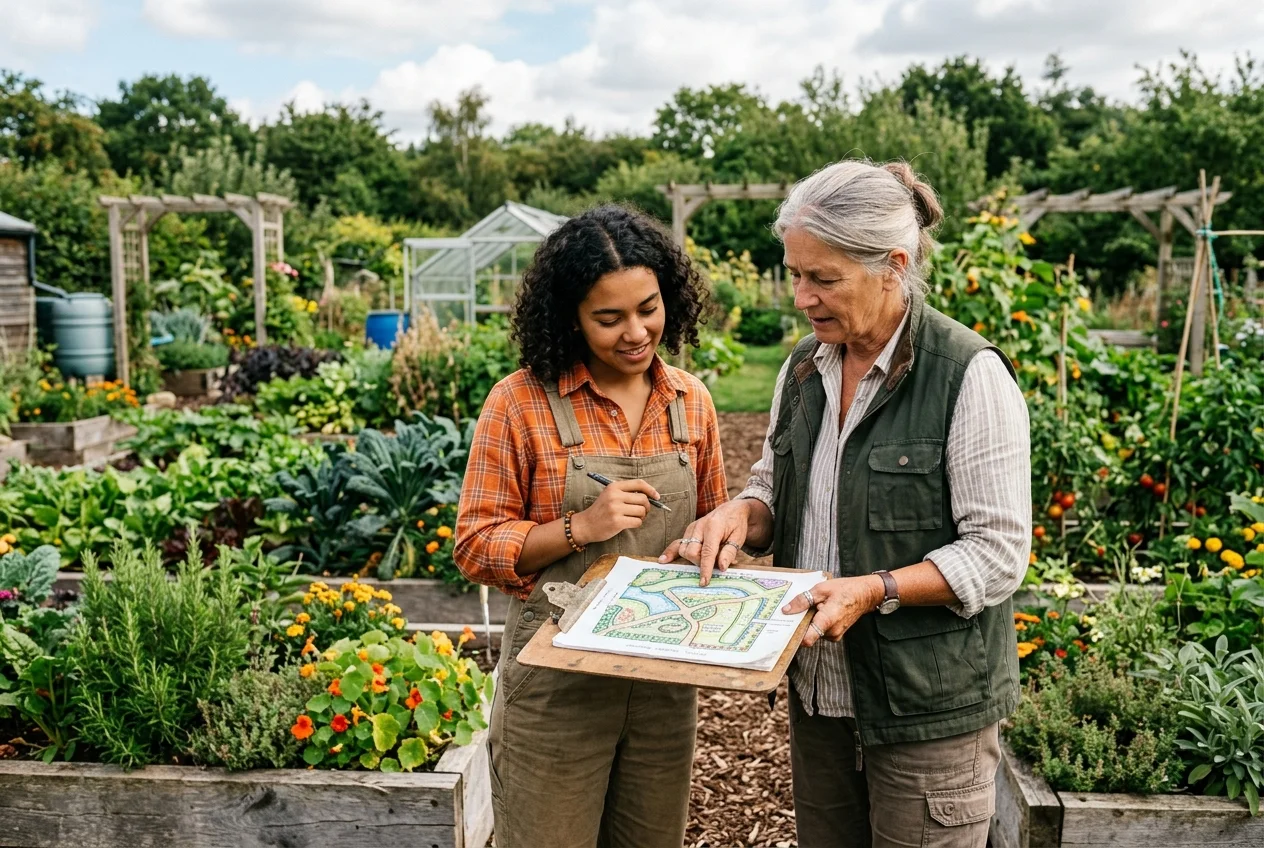
Nearly seven and a half centuries after Augsburg's guild letter, a mentoring system exists that works in a strikingly similar structure, but stands deliberately outside any state regulation: the Permaculture Diploma. It doesn't certify a licensed trade; it certifies the ability to independently design and implement working permaculture systems for self-sufficiency and ecological land use, and it does that through an internationally networked peer system of experienced practitioners rather than a government body.
The path to the diploma, as described by the Permakultur-Akademie im Alpenraum (PIA), takes a minimum of two years, counted from the point a candidate begins their actual diploma project work. Throughout that time, each candidate is accompanied by two experienced, already-diplomaed practitioners who guide them through the project work and ultimately recommend them for diplomization: "je zwei in der Permakultur-Gestaltung erfahrene Diplomierte, die die DiplomandInnen bei deren Projektarbeit begleiten und sie schlussendlich zur Diplomierung vorschlagen."
What the diploma concretely requires
Unlike a weekend course with a participation certificate, the Permaculture Diploma is tied to a substantial set of measurable criteria. Anyone seeking diplomization needs to show at least ten documented diploma projects, one of which may carry over from an earlier specialist-training stage. Those projects must span at least three different climate zones and involve different social groups; a single design in your own backyard isn't enough.
On top of that comes a course requirement: at least six diploma courses, four of them already completed during the specialist-training stage. The whole curriculum explicitly follows the internationally recognized framework of Bill Mollison, co-originator of the permaculture design concept; the program states outright that it follows a "Curriculum nach Bill Mollison" (curriculum by Bill Mollison). The diploma isn't a regional side format; it's tied to a globally shared standard.
| Criterion | Requirement |
|---|---|
| Minimum duration | 2 years from diploma project start |
| Mentorship | 2 experienced diploma-holders as mentors |
| Diploma projects | 10+ (1 may carry over from specialist training) |
| Climate zones / groups | 3+ climate zones, different social groups |
| Diploma courses | 6+ (4 during specialist training) |
| Curriculum | after Bill Mollison, internationally recognized |
Practice sites: where the craft happens in person
Anyone who wants to test the waters before signing up for a two-year commitment doesn't have to head straight for the Alps. The German-language platform permakultur.de maintains a public directory of "Praxisorte" (practice sites), active permaculture project locations where interested visitors can drop in and learn hands-on. The list covers at least 23 active locations across German-speaking regions, plus at least one in Romania, further evidence of how far this mentoring network reaches beyond any single national border.
Tip
Visiting a practice site is the lowest-risk first step, long before committing to a multi-year diploma path. You'll meet real mentors and real projects there without taking on any obligation.
Caution
The Permaculture Diploma is not a state-recognized or legally regulated credential. Unlike the Meisterbrief under the Handwerksordnung, it doesn't authorize you to run a licensed trade business and carries no legal standing under German law. It's a self-organized, internationally networked peer-certification system. The Permakultur-Akademie im Alpenraum (PIA) cited here explicitly serves the Alpine region, meaning Austria, Switzerland, and southern Germany, so it's an internationally networked Alpine-region program rather than an exclusively German national one, even though German practitioners do use it.
Two traditions compared
Placed side by side, both systems share the same basic skeleton: a training stage, followed by a practice and project stage under personal guidance, and a final step in which experienced members of the community decide who gets admitted to the circle of the fully trained. The decisive difference lies in legal status.
| Feature | Medieval guild | Permaculture Diploma today |
|---|---|---|
| Structure | Apprentice → journeyman → master | Specialist training → diploma projects with 2 mentors → diplomaed |
| Timeframe | years, regulated differently by region | 2+ years from project start |
| Legal status | from the 13th c., partly a codified trade monopoly | no state-recognized credential |
| Today's legacy | chambers of trade, guild associations, Meisterbrief under the HwO | independent, internationally networked peer system |
The guild was gradually absorbed into state law over time and still exists today in the form of chambers, trade associations, and the Handwerksordnung. The Permaculture Diploma never took that path and isn't built to take it either. It deliberately remains a network among peers, carried by mentorship rather than statute, and that's exactly where both its freedom and its legal limit lie.
Frequently asked questions about guild history and the Permaculture Diploma
Did today's master craftsman title come directly from the medieval guild?
In institutional lineage, yes: today's Handwerkskammern and Innungen are considered direct successors of the medieval guilds and now administer the master craftsman exam under the current Handwerksordnung. The concrete legal mechanics of that modern exam are their own detailed topic, though.
What does the word "Zunft" originally mean?
It comes from Old High German "(ge-)zumft," meaning community or agreement, derived from the verb for "to be fitting" or "proper." At its core, it was less about the craft itself and more about communal rule-following.
Exactly when did guilds lose their power?
In two separate steps. Politically as early as 1548, under the karolinische Regimentsordnung. Economically, meaning control over who could practice a trade, much later: in Bavaria that ended with freedom of trade in 1869. Nationwide dating is more complicated and varies by region.
Is the Permaculture Diploma a state-recognized credential?
No. Unlike the Meisterbrief under the Handwerksordnung, the Permaculture Diploma has no legal basis and doesn't authorize you to run a licensed trade business. It's a self-organized, internationally networked peer-certification system.
How long does the path to the Permaculture Diploma take, and who accompanies you?
At least two years, counted from when you start your own diploma projects. Each candidate is accompanied by two experienced diploma-holders who serve as mentors throughout the project work and ultimately recommend them for diplomization.
Sources
- "Zunft", Wikipedia (German), accessed 2026-08-19
- "Zünfte", Historisches Lexikon Bayerns, accessed 2026-08-19
- "Weg zum Permakultur-Diplom mit PIA", Permakultur-Akademie im Alpenraum (PIA), accessed 2026-08-19
- "Praxisorte", permakultur.de, accessed 2026-08-19
This content was created with AI assistance, primarily for research and drafting. Reviewed and approved by our editorial team.