TL;DR
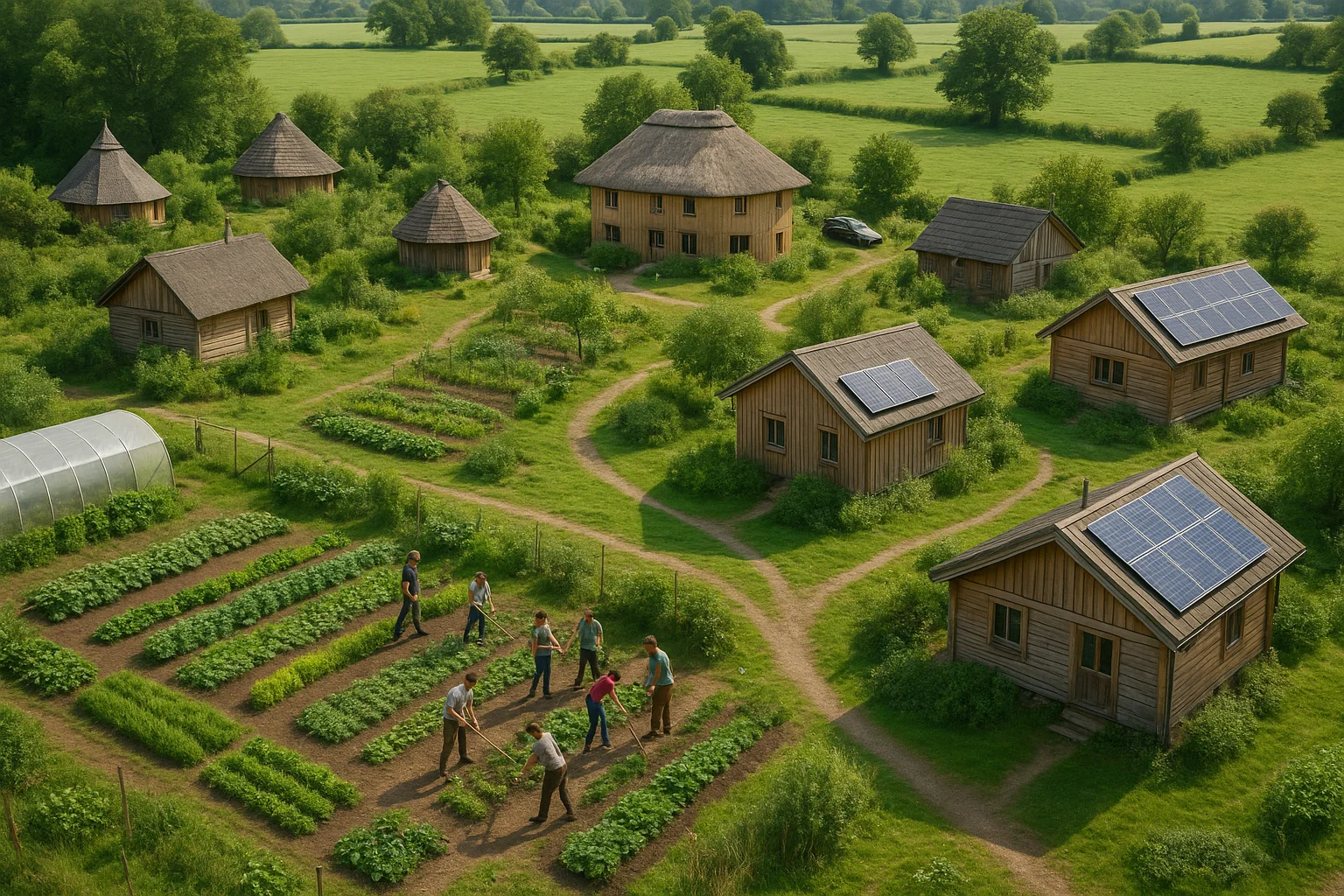
Ecovillages are intentional communities with an ecological focus, shared infrastructure, and self-governance. The admission process takes 1-2 years, entry costs range from 15,000-50,000 EUR. We profile 8 German and 7 European projects currently accepting members.
You are thinking about moving into a community. But how do you find the right project? What does it cost to join? And how do you distinguish an ecovillage from a shared house with a garden? This article gives you the facts you need to make an informed decision.
We researched 15 projects across Germany and Europe that are accepting new members as of 2026. With concrete numbers on size, costs, and admission requirements.
Ecovillage, Cohousing, Shared House: What is What?
Not every shared living arrangement is an ecovillage, and not every ecovillage works the same way. The terms often get mixed up. Here is how they differ:
| Feature | Ecovillage | Cohousing | Shared House |
|---|---|---|---|
| Size | 30-600 people | 15-40 households | 2-10 people |
| Ecological focus | Core principle | Often, not required | Optional |
| Shared infrastructure | Extensive (workshops, gardens, energy) | Common house, gardens | Kitchen, bathroom |
| Self-governance | Full (plenary, consensus) | Partial | Informal |
| Financial commitment | 15,000-50,000 EUR buy-in | Purchase price for unit | Rent |
An ecovillage, then, is an intentional community with an ecological focus, shared infrastructure, and democratic self-governance. It is about more than living together: it is a deliberate life model with shared responsibility.
8 Ecovillages in Germany Currently Accepting Members
These projects are actively accepting new members as of 2026. Data comes from public sources and direct contact with the communities.
- Ökodorf Sieben Linden (Saxony-Anhalt): ~150 people, cooperative. Buy-in 15,000-30,000 EUR. One of the oldest and best-known ecovillages in Germany. Straw-bale houses, own school, extensive self-sufficiency. Admission: 1-week trial stay, then 1-year getting-to-know phase.
- Gemeinschaft Tempelhof (Baden-Württemberg): ~140 people, cooperative. Former estate with community-supported agriculture, forest kindergarten, and education center. Focus on permaculture and sociocratic decision-making.
- Ökodorf Brodowin (Brandenburg): ~40 people. Smaller community in the Uckermark region with Demeter farming. Lower entry costs, ideal for families seeking rural tranquility.
- Lebensgut Cobstädt (Thuringia): ~30 people. Young project on an old farmstead. Community childcare, gardening, and crafts. Still in development, so entry opportunities are favorable.
- Schloss Tonndorf (Thuringia): ~70 people, cooperative. Living in a medieval castle with community garden, workshops, and cultural programs. Cooperative shares from 20,000 EUR.
- KoDorf Wustermark (Brandenburg): ~100 people planned, new build. Modular tiny houses on shared land. Modern concept with co-working and shared mobility. Spots still available.
- Gemeinschaft Sulzbrunn (Bavaria): ~50 people. Former monastery in the Allgäu region with seminar operations, gardening, and spiritual focus. Consensus decisions, regular community meetings.
- Wir bauen Zukunft (Nieklitz, Mecklenburg-Western Pomerania): ~30 people. Young project focused on sustainable building and circular economy. Open workshops, education programs. Low entry barrier as still in development.
What stands out: six of the eight projects organize as a cooperative, only two run on association or rental models. The younger projects like Cobstädt, Wustermark, and Nieklitz have lower entry barriers because they're still building themselves and need members willing to pitch in. If you're after established infrastructure and decades of experience instead, Sieben Linden or Tempelhof are the more likely fit.
7 Ecovillages in Europe (and Beyond)
If you are willing to leave Germany, you will find established communities across Europe and globally with decades of experience.
- Tamera (Portugal, ~200 people) - Peace research center with permaculture water retention landscape. International community, English as working language.
- Findhorn (Scotland, ~400 people) - One of the oldest ecovillages worldwide (founded 1962). Own wind turbines, eco-houses, international education programs.
- Damanhur (Italy, ~600 people) - Spiritual community in Piedmont with its own currency, underground temple, and diverse economy.
- Auroville (India, ~3,000 people) - International city of the future, founded 1968. UNESCO-supported. No private property, shared economy.
- Kibbutz Lotan (Israel, ~60 people) - Ecological kibbutz in the Negev desert. Focus on renewable energy, bird conservation, and sustainable architecture.
- Hjortshoj (Denmark, ~250 people) - Largest cohousing/ecovillage project in Scandinavia. Shared energy supply, car-sharing, communal meals.
- Torri Superiore (Italy, ~20 people) - Restored medieval village in Liguria. Small, family-like, Mediterranean climate. Guest operations and permaculture.
Going abroad pays off mainly if the German projects feel too small or too young for you. Findhorn and Damanhur have existed for over 40 years, Auroville for nearly 60, and at roughly 3,000 residents it houses more people than all eight German projects combined. The trade-off: English instead of German as the everyday language, and a trip that makes visiting before you decide considerably more involved.
The Admission Process: How to Get In
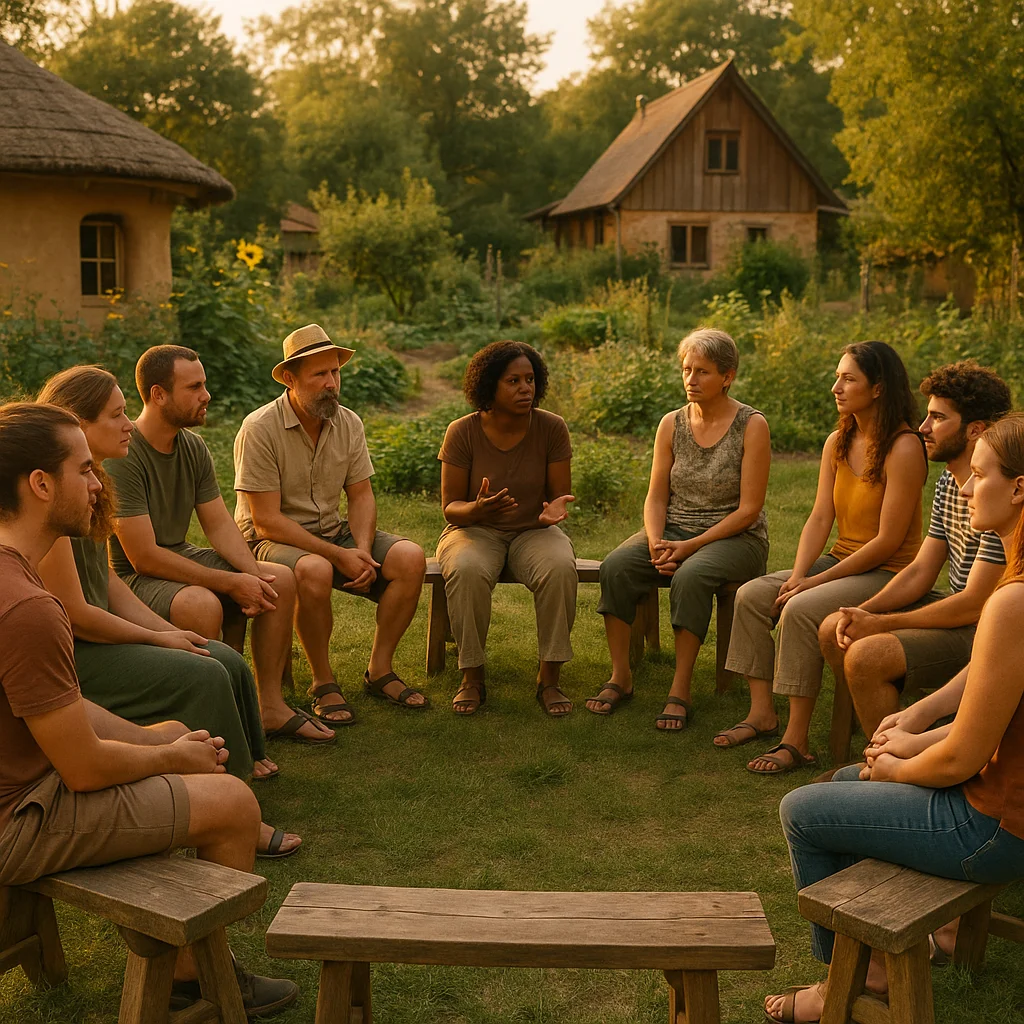
No ecovillage accepts you after a job interview. The process is deliberately slow because a community only works when everyone fits together. Here is the typical path:
- Trial stay (1-2 weeks): You live in the guest area, participate in work and plenary, and experience daily life. Cost: 20-50 EUR/day.
- Getting-to-know phase (3-12 months): Regular visits, work in project groups, participation in decisions. You get a mentor from the community.
- Membership application: You submit a formal application. Some communities ask you to write a letter about why you want to join.
- Community vote: Existing members vote (consensus or qualified majority). With consensus, a single person can veto.
Expect 1-2 years
From first visit to full membership typically takes 12-24 months. This is not bureaucratic madness but intentional: the community protects itself from bad decisions, and you protect yourself from ending up in the wrong place.
Financial Models: What Does a Spot Cost?
Financial commitment varies widely depending on legal structure and project. Here are the common models:
| Model | One-time cost | Monthly cost | Example |
|---|---|---|---|
| Cooperative | 15,000-50,000 EUR | 200-600 EUR/month | Sieben Linden, Tempelhof |
| Association | 500-5,000 EUR | 300-800 EUR/month | Cobstädt, Sulzbrunn |
| Partnership / LLC | 20,000-80,000 EUR | 150-400 EUR/month | Smaller projects |
| Rental model | 0-2,000 EUR deposit | 400-900 EUR/month | Wir bauen Zukunft |
Cooperative shares are not lost money
With most cooperatives, you get your buy-in back when you leave (minus potential depreciation). It is more like a deposit than a fee.
Why People Leave Ecovillages
Not everyone who moves in stays. Estimates suggest 20-40% of members leave a community within the first 5 years. The most common reasons:
- Conflicts over decision processes: Consensus sounds democratic but means every decision takes time. Those used to quick results get frustrated.
- Loneliness despite community: Paradoxical but real. In a community you are never alone, but deep friendships do not form automatically. Some feel isolated within the group.
- Financial strain: Cooperative shares plus limited earning opportunities on-site. Without remote income, it gets tight.
- Unequal work commitment: Some work 30 hours per week for the community, others 5. This creates tension.
- Life changes: Children, relationship changes, career opportunities elsewhere. Life evolves, and the community no longer fits.
Tip before moving in
Visit at least 3 different communities before deciding. Every ecovillage has its own culture, and what sounds great on paper may feel completely different in daily life.
Frequently Asked Questions About Ecovillages
Can you work remotely in an ecovillage?
Yes, most modern ecovillages have stable internet and co-working spaces. Many residents work remotely. However, you are often expected to contribute 10-20 hours per week of community work on top of that.
Are ecovillages suitable for families with children?
Often especially well suited. Many ecovillages have their own kindergartens, and children grow up with multiple caregivers in nature. However, school infrastructure in rural areas can be limited.
What happens to my investment if I leave?
With cooperatives, you typically get your shares back, often with a notice period of 6-24 months. With association models, contributions are usually non-refundable. Clarify this in writing before joining.
Do I have to be vegetarian or vegan?
That depends on the project. Some communities have vegan communal kitchens but allow private dietary choices. Others keep their own animals. Ask directly before your trial stay.
Can I move in as a single person or do I need a family/partner?
Absolutely. Many ecovillages have single rooms or small apartments. Some residents arrive as singles and find new relationships within the community. The community itself is your social network.