TL;DR
Without a will, multiple children or relatives automatically inherit jointly as an Erbengemeinschaft (heir community), which needs unanimous consent for a sale or major renovation, or else any co-heir can force a Teilungsversteigerung, a partition auction that typically sells far below market value. A handwritten will under Section 2247 BGB is valid for free but doesn't replace the Erbschein (certificate of inheritance). A notarial will, per a 2005 German Federal Court of Justice ruling (case XI ZR 311/04), replaces the Erbschein with banks and the land registry and is actually cheaper for a 50,000-euro estate: about 132 euros versus 264 euros. A Vorsorgevollmacht (power of attorney) is required because spouses and adult children canNOT automatically act for you if you lose capacity. A Patientenverfügung (advance directive) only takes effect once you can't decide for yourself, and only if it names specific treatment situations clearly.
Important: This is not legal advice
This article explains general legal principles and is not a substitute for individual advice. Especially with a homestead owned jointly with other heirs, an existing mortgage or Grundschuld (land charge), or a blended family, small formal errors can void a will entirely or produce an outcome you never intended. Talk to a Notar (notary) or a Fachanwalt für Erbrecht (specialist inheritance-law attorney) before drafting a will or power of attorney. The rules on heir communities and partition auctions described here are general; regional jurisdiction and your specific family and ownership situation decide the details in any real case.
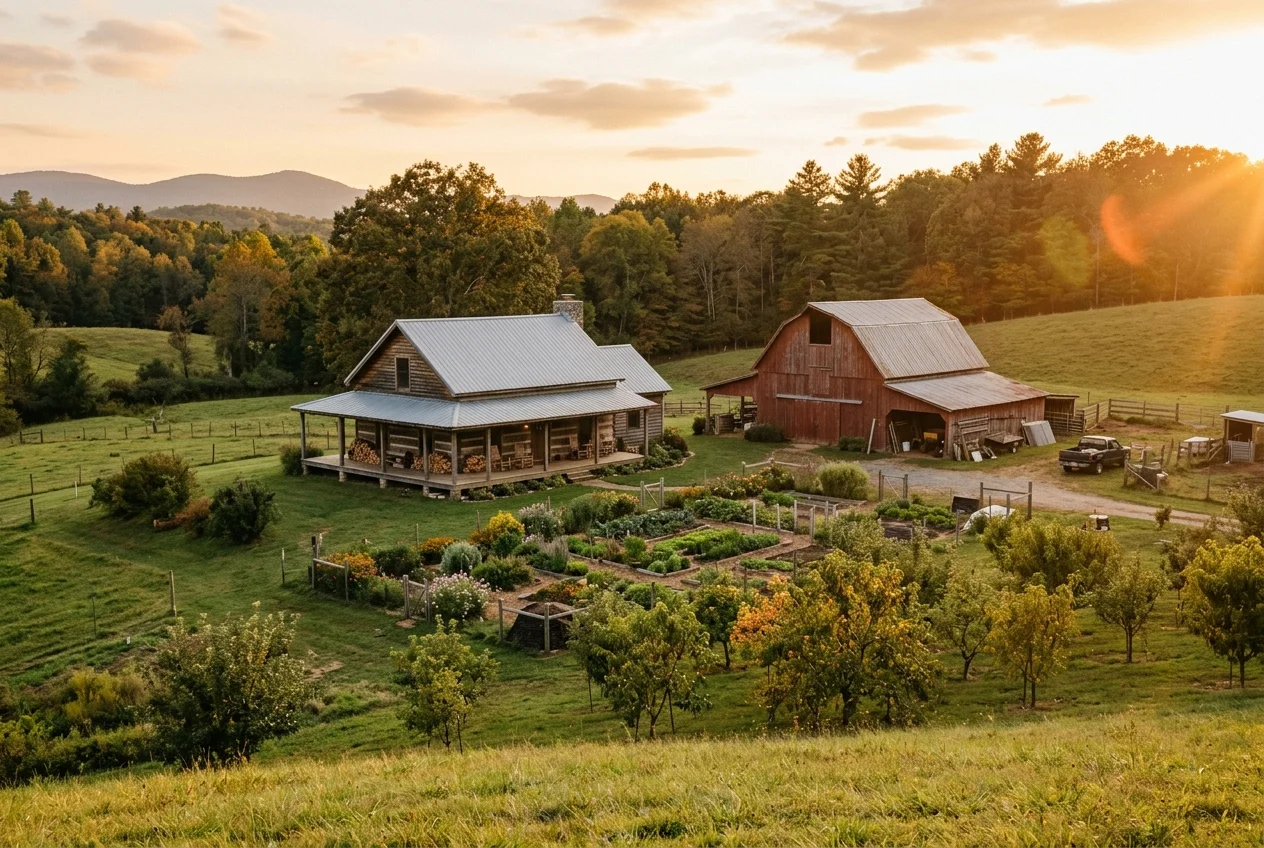
A homestead built, planted, and maintained by hand over decades doesn't split neatly into equal shares. Without a will, what happens to it is decided by statute, not by what you actually wanted.
This article translates the abstract categories of will, power of attorney, and advance directive into the concrete decisions you can make now about land, buildings, and infrastructure, with real costs, procedures, and pitfalls instead of generic advice.
Why estate planning weighs differently on a homestead
A hand-dug well, soil built up over years, an orchard that only really starts producing after its tenth year, a workshop full of tools, a solar setup sized exactly to your own load: all of that lives inside a self-built homestead, but none of it shows up in the land registry as anything distinguishing it from any other parcel. As far as inheritance law is concerned, only the registered owner counts, not the labor that went into the place.
That's exactly why a missing will hurts more on a homestead than on a city apartment. An apartment can, worst case, be sold among several heirs and the proceeds split without losing anything irreplaceable. A working homestead with living infrastructure, animals, and seasonal tasks tolerates years of deadlock from a fractured heir community far less well, and that deadlock is the statutory default the moment nobody has planned ahead.
Without a will, the heir community decides, not you
If you die without a will, statutory intestate succession takes over. If you have multiple children or relatives who are jointly entitled to inherit, and you haven't put in writing that one specific person receives the homestead, all of them automatically become an Erbengemeinschaft. They own the property together, in undivided shares, not as clearly separated parcels or buildings.
According to Verbraucherzentrale (the German consumer advice organization), extraordinary decisions require the consent of every single co-heir, not just a majority. For a homestead, that plays out concretely:
- Major repairs: a new roof, redoing the water line, or replacing the heating system all need every co-heir's sign-off.
- Selling the whole property or part of it: also unanimous only, even if three out of four heirs already agree.
- Taking on a loan or a new Grundschuld: for instance to modernize the place, again requires everyone on board.
When that unanimity fails, say one co-heir wants to sell and another wants to keep farming, Verbraucherzentrale notes that any single co-heir can petition for a Teilungsversteigerung, a court-ordered partition auction. The property gets auctioned off regardless of whether the other heirs agree. Such auctions typically achieve significantly lower prices than a normal sale on the open market, on top of the added procedural costs and the delay before the auction date. A homestead a family spent decades working on can end up going to strangers below its real value, simply because three siblings couldn't agree on a way forward.
The handwritten will: free, but strict on form
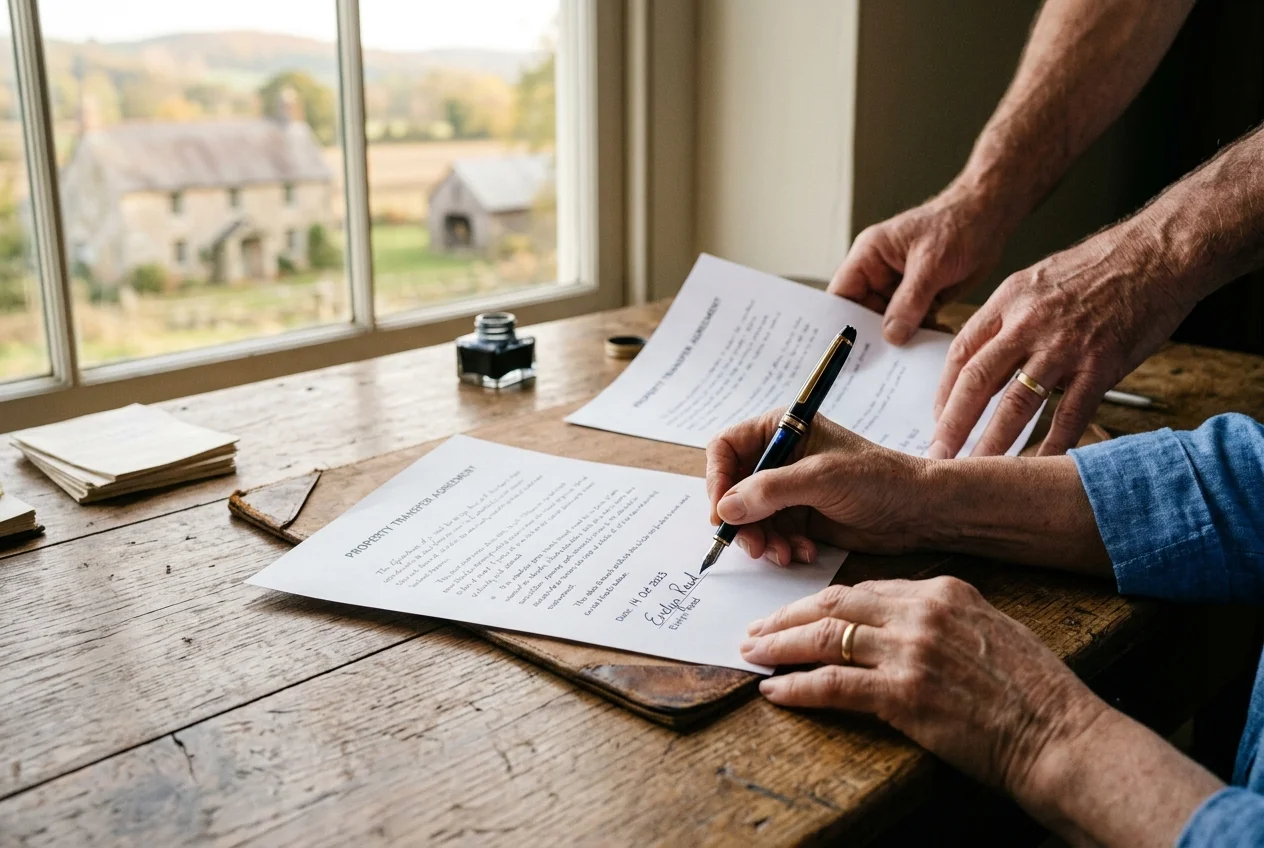
The simplest way to prevent that automatic outcome is a handwritten will under Section 2247 of the German Civil Code (BGB). The statute requires that you write the entire will by hand and sign it yourself. A date and place are recommended but not a strict validity requirement: a missing date only invalidates the will, per the statute, if it creates genuine doubt about when it was actually written.
For a homestead, that means you can decide yourself who gets which building, which parcel, or which part of the operation, without booking an appointment or paying a fee. The catch is exactly that independence. Nobody checks your wording before you sign, and a homestead with multiple registered parcels, outbuildings, or an existing mortgage is easy to describe ambiguously in a few handwritten sentences.
Common formal mistakes
A will typed on a computer and merely signed by hand is invalid, the entire text has to be handwritten. Other common pitfalls: unclear identification of which parcels or buildings are meant, no fallback provision if the intended primary heir dies before you, and a will nobody can find because it was never filed with the probate court. Any one of these can mean intestate succession still applies when it matters most.
The notarial will: the pricier-looking option that isn't
In 2005 (case XI ZR 311/04), Germany's Federal Court of Justice (BGH) confirmed that a notarial will together with the probate court's Eröffnungsprotokoll (opening protocol) provides banks and the land registry with the same proof as an Erbschein, effectively replacing it. A handwritten will does not have that replacing effect. Heirs left with only a handwritten will still have to apply for and pay for a separate Erbschein before a bank releases funds or the land registry can be updated, with its own cost and additional wait.
Stiftung Warentest ran the actual numbers for a 50,000-euro estate, and the comparison changes the usual assumption:
| Criterion | Handwritten Will | Notarial Will |
|---|---|---|
| Notary cost to create it (50,000-euro estate) | about 0 EUR | about 132 EUR |
| Replaces the Erbschein at banks and the land registry | No | Yes (BGH, case XI ZR 311/04) |
| Separate Erbschein still needed (50,000-euro estate) | about 264 EUR | not needed |
| Total cost until heirs can act | about 264 EUR | about 132 EUR |
Bottom line, in this example the notarial will isn't the more expensive option, it's the cheaper one once you add in the Erbschein most heirs of a handwritten will still have to buy. The common assumption that a notary appointment is the costlier route doesn't hold once you factor in the handwritten will's follow-on costs.
Vorsorgevollmacht: who decides when you no longer can
A widespread assumption is that a spouse or adult children can automatically act for you if an accident, a stroke, or a coma leaves you unable to decide. Per Verbraucherzentrale, that's not true: without a written Vorsorgevollmacht, not even a spouse may handle bank transactions or make binding decisions on your behalf. Instead, the Betreuungsgericht (guardianship court) appoints a legal guardian, who isn't necessarily a close relative and who operates under ongoing court supervision.
On a working homestead, that's more than a legal technicality. Animals still need feeding, feed still needs ordering, insurance claims still need filing, and repairs to a well or the power system still need authorizing, regardless of whether a court happens to be deciding on guardianship at that moment. A Vorsorgevollmacht written specifically for a homestead should therefore cover more than generic representation:
- Banking authority over the farm accounts: so ongoing bills for feed, the vet, and supplies keep getting paid.
- Authority to sign contracts and repairs: for tradespeople, insurance matters, and larger purchases that can't wait.
- Explicit authority over livestock and ongoing operations: who decides on selling, buying, or winding down an animal herd.
- A separate healthcare power of attorney: for medical decisions, complementing the Patientenverfügung covered next.
Without these provisions, a court-appointed guardian ends up deciding matters that someone from the family or the homestead community would likely judge better, and with the delay a court process adds.
Patientenverfügung: setting your medical wishes in advance
Per gesund.bund.de, the German Federal Ministry of Health's portal, a Patientenverfügung only takes legal effect once you're no longer able to express your treatment wishes yourself. Doctors and caregivers only have to follow it if the wording names specific treatment situations clearly and unambiguously; generic phrases like "no life-prolonging measures" usually aren't specific enough. Notarization isn't required, but written form with a signature, date, and place is.
On a homestead with a chainsaw, a tractor, ladders, and livestock, day-to-day accident risk looks different than it does behind a desk. That's exactly why a clearly worded advance directive often pays off earlier in life here than for people with mostly sedentary work, not only once you're already elderly.
Tip
Keep the Vorsorgevollmacht and Patientenverfügung somewhere your appointed proxy can find immediately in an emergency, and give them their own copy too. You can also register the Vorsorgevollmacht with the Zentrales Vorsorgeregister (Germany's central register of advance directives, run by the Bundesnotarkammer), so a guardianship court finds out quickly that provisions are already in place.
Checklist: what you can settle for the homestead now
None of this has to happen in a single afternoon, but each step can start independently of the others:
- Get a land registry extract and a rough valuation: you make better decisions once you know exactly what you're deciding about, existing Grundschuld included.
- Work out who realistically wants to and can run the homestead: not automatically the oldest child, but whoever actually has the interest and the skills.
- Choose between a handwritten and a notarial will: with multiple possible heirs, an ongoing mortgage, or complicated parcels, the cost comparison above favors the notary.
- Draft the power of attorney and advance directive alongside it: not only once a will is already on the agenda, since loss of capacity can strike at any age.
- File the documents somewhere findable and register the power of attorney: with the Zentrales Vorsorgeregister, so it surfaces quickly in an emergency.
- Book time with a Notar or a Fachanwalt für Erbrecht: as soon as multiple heirs, an existing Grundschuld, or a blended family are part of the picture.
A homestead that took decades of work deserves a few hours of paperwork more than the risk of ending up at a forced partition auction sold to strangers.
Frequently asked questions about wills, power of attorney, and heir communities
Is a handwritten will enough for a homestead with multiple possible heirs?
Legally, yes, if it meets the formal requirements of Section 2247 BGB: written entirely by hand and signed. But with multiple heirs, an existing Grundschuld, or unclear property boundaries, the risk grows that the wording gets interpreted differently later. A notary appointment costs little in those cases compared with the potential dispute.
What happens if multiple heirs can't agree on the homestead's future?
Without unanimous agreement, any co-heir can petition for a Teilungsversteigerung. The property is then auctioned off, usually at a lower price than a normal sale, on top of procedural costs and delay for everyone involved.
Can my spouse automatically decide for me if I'm unresponsive after an accident?
No. Without a written Vorsorgevollmacht, not even a spouse can automatically handle banking or make medical decisions for you. The guardianship court instead appoints a legal guardian, who isn't necessarily a member of your family.
Does the advance directive need to be notarized?
No, notarization isn't required. What's required is written form with a signature, date, and place, plus wording specific enough that doctors and caregivers can tell what you want in a particular treatment situation.
Does a notarial will actually pay off financially?
For a 50,000-euro estate, yes: the notary fee runs about 132 euros and replaces the Erbschein, which would otherwise cost an additional 264 euros and which a handwritten will doesn't replace. On balance, the notarial will ends up cheaper, not more expensive.
Sources
- "Section 2247 BGB (German Civil Code)", gesetze-im-internet.de, accessed 2026-08-17
- "Nachlass: Notarielles Testament ersetzt den Erbschein" (A notarial will replaces the certificate of inheritance), Stiftung Warentest, accessed 2026-08-17
- "Immobilie vererben und erben: Was Sie dazu wissen müssen" (Inheriting and bequeathing real estate: what you need to know), Verbraucherzentrale, accessed 2026-08-17
- "Online-Vorsorgevollmacht: Jetzt kostenlos erstellen und vorsorgen!" (Free online power of attorney), Verbraucherzentrale, accessed 2026-08-17
- "Vorsorge für den Ernstfall" (Preparing for a medical emergency), gesund.bund.de (Federal Ministry of Health), accessed 2026-08-17
This content was created with AI assistance, primarily for research and drafting. Reviewed and approved by our editorial team. This article is not a substitute for individual legal advice.